

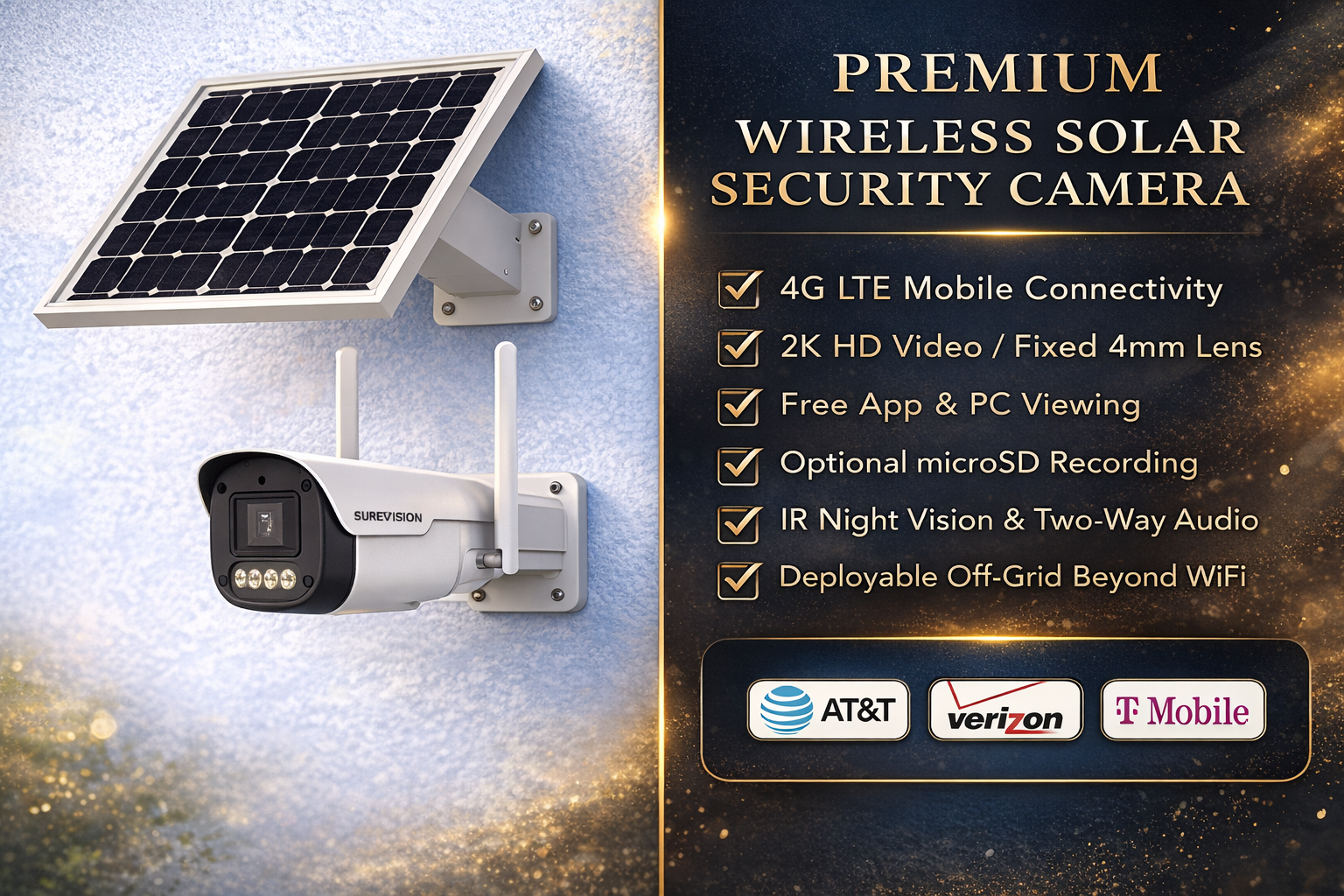
A wireless solar security camera can be one of the smartest surveillance solutions for remote property, construction sites, rural land, gates, and off-grid locations. But not every solar camera is built the same. Some are lightweight consumer devices designed for simple convenience alerts. Others are purpose-built for serious remote surveillance where power and WiFi are not practical. This guide explains what matters, what to compare, where these cameras work best, and how to think about 4G LTE solar surveillance versus standard WiFi cameras. For buyers who need a more professional off-grid solution, the SureVision 4G LTE solar kit is built around 4G LTE cellular connectivity, a 60W solar panel, a 320Wh lithium battery, 4MP 2K video, optional microSD recording, and free phone + PC viewing. A wireless solar security camera is a surveillance camera designed to operate in locations where traditional wired infrastructure is difficult or impossible. Depending on the design, the camera may use solar-assisted power, cellular connectivity, local storage, or a combination of all three. In the most practical off-grid setups, “wireless” means the camera can communicate without relying on local WiFi. That is why 4G LTE support matters so much for remote surveillance. If there is no stable WiFi at the site, a cellular-connected camera is often the more realistic solution. Many buyers start with the phrase “wireless solar security camera,” but what they actually need is a camera that works where there is no nearby router, no convenient internet service, and no easy trenching path. That is where 4G LTE changes the equation. The SureVision 4G LTE solar kit supports compatible SIM cards from Verizon, AT&T, and T-Mobile, allowing it to connect over cellular service instead of depending on WiFi. That makes it a much better fit for true remote deployment than a typical WiFi-only solar camera. If you are comparing solar surveillance options, focus on the things that actually determine long-term usefulness: For example, the SureVision 4G LTE kit includes 4MP 2560 × 1440 video, a 4mm lens with 90° wide-angle view, IR night vision up to 164 feet, built-in microphone and speaker, and free app + PC viewing. Those are the kinds of specifications that make a camera more useful in real surveillance situations, not just in marketing copy. The best wireless solar security camera is not simply the cheapest one or the one with the most consumer reviews. The best one is the camera that actually fits the site, the power conditions, the network reality, and the security risk. If the job calls for real off-grid surveillance, a 4G LTE solar security camera is usually the better category to evaluate. For buyers who need a stronger remote-deployment option, the SureVision 4G LTE solar kit is positioned far closer to a professional solution than a typical lightweight solar WiFi camera.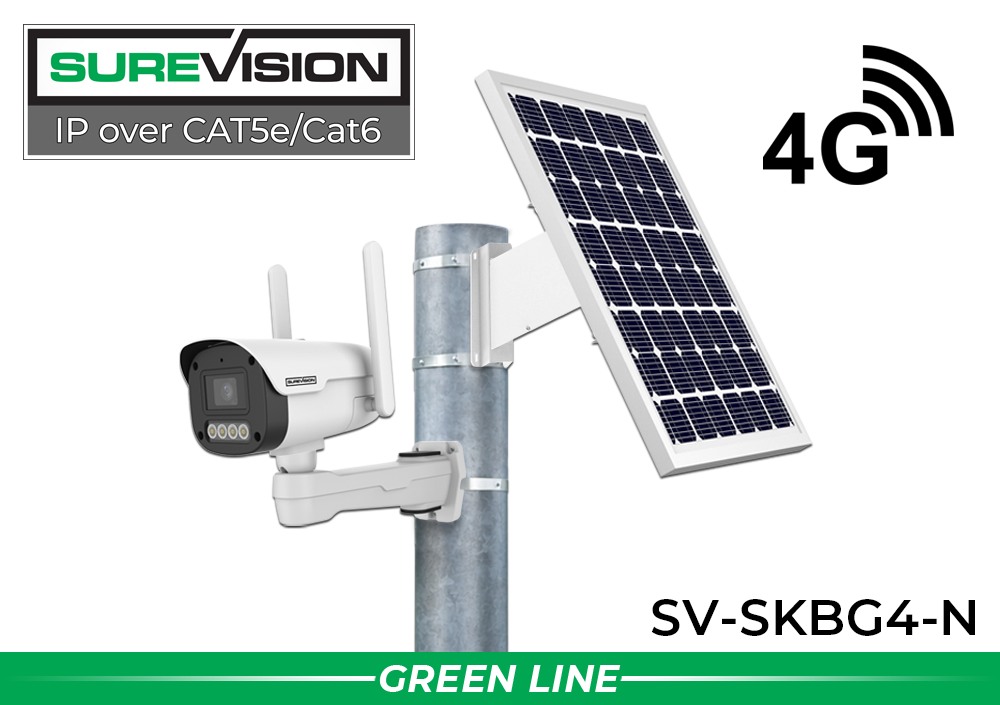
Expert Guide to Wireless Solar Security Cameras
What Is a Wireless Solar Security Camera?
Why 4G LTE Matters More Than Most Buyers Realize
Best Uses for Wireless Solar Security Cameras
Comparison Table: Consumer Solar WiFi Camera vs. Professional 4G LTE Solar Camera
What to Look for in a Better Wireless Solar Security Camera
Final Expert Take
Expert Guide to Wireless Solar Security Cameras | 4G LTE
Construction Sites
Monitor entrances, staging areas, and deliveries where there is no permanent power.
Remote Gates & Driveways
Get visibility without trenching cable or relying on a distant router.
Farms, Ranches & Barns
Monitor livestock areas and perimeter points far from WiFi.
Equipment Yards
Reduce theft risk by monitoring heavy equipment and trailers.
Off-Grid Cabins & Properties
Check your property remotely over LTE and receive motion notifications.
Temporary Jobs & Events
Deploy quickly, then move it to the next site when needed.
4G LTE Support Solar + Battery Capacity Video Resolution Night Vision Local Recording Real Support
Explore the product
Need an off-grid surveillance option for remote property, gates, farms, or job sites?
View the 4G LTE Wireless Solar Security Camera