
What You’ll Learn in This Guide
What Is a PoE Security Camera?
A PoE security camera is an IP camera that receives both power and data through a single Ethernet cable. PoE stands for Power over Ethernet, and it allows the camera to connect back to a compatible network video recorder or PoE network without needing a separate local power supply at the camera location.
This is one of the biggest reasons PoE cameras are so popular for professional surveillance. A single cable run can simplify installation, reduce clutter, improve reliability, and make it easier to deploy cameras around offices, warehouses, retail stores, schools, restaurants, parking areas, homes, and commercial properties.
In simple terms:
- A PoE camera is a wired IP security camera
- It uses Ethernet cable for both power and communication
- It records to a compatible SureVision NVR
- It can support remote viewing, smart alerts, and 24/7 recording
- It eliminates the need for separate power adapters at each camera
How PoE Security Camera Systems Work
A complete PoE security camera system usually includes PoE cameras, an NVR, storage, and Ethernet cabling. Each camera sends its video signal digitally to the recorder while also receiving power through the same cable. The result is a clean, professional-grade surveillance setup designed for consistent 24/7 performance.
For businesses and serious buyers, this design offers a major advantage over consumer-grade cameras. Instead of relying on batteries, Wi-Fi range, and cloud subscriptions, a properly designed PoE system gives you local storage, reliable wired communication, better long-term scalability, and the ability to support more demanding surveillance applications.
Why Buyers Choose PoE Security Cameras
1. Reliable Wired Performance
Wired PoE cameras avoid many of the problems that affect wireless systems, including unstable connections, interference, signal dropouts, and battery limitations.
2. One Cable Simplicity
Power and data travel together through one Ethernet cable, which helps simplify installation and reduces the need for local electrical outlets near each camera.
3. Better Image Quality
PoE IP cameras are popular for high-resolution video, clearer digital detail, and features that help users capture faces, vehicles, activity zones, entrances, and property lines more effectively.
4. Local Recording with No Monthly Fees
When paired with a compatible SureVision NVR, PoE cameras can record locally without forcing users into recurring cloud subscriptions.
5. Scalable for Growth
PoE camera systems can be designed for small properties or larger multi-camera jobs, making them a smart choice for buyers who want room to expand over time.
6. Professional Features
Advanced PoE systems can support powerful night vision, motion-based alerts, remote access, and intelligent surveillance features depending on the model and recorder.
Planning PoE Cable Distance, NVR Capacity & Video Storage
A dependable PoE security camera system begins with the system design—not only the camera resolution. Before ordering, confirm the cable path, recorder channel count, incoming bandwidth, hard-drive capacity, desired retention time and whether every location needs continuous recording or event-based recording.
Use Quality Ethernet Cable
Choose installation-rated Cat5e or Cat6 cable with solid-copper conductors. Avoid copper-clad aluminum cable for professional PoE runs. Outdoor, direct-burial and plenum locations require cable rated for those environments.
Understand Distance Limits
Standard Ethernet guidance is generally 328 feet per run. Select SureVision NVRs support extended PoE modes reaching approximately 800 feet with compatible cameras and proper cabling; verify the exact recorder, camera and speed requirements before installation.
Leave Recorder Capacity
Choose an NVR with enough channels and input bandwidth for today’s cameras plus reasonable expansion. A four-camera installation may benefit from an eight-channel recorder when future entrances, parking areas or work zones are likely.
Size Storage for Retention
Storage depends on camera count, resolution, frame rate, compression, recording schedule and scene activity. H.265 or Ultra 265 can reduce storage needs compared with older H.264 settings, but your retention goal should determine the final hard-drive size.
Professional planning tip: The best camera angle is determined by the detail you need at the target—not simply by how wide an area the camera can see. A wide view is excellent for awareness, while positive identification at distance may require a narrower or motorized-zoom lens.
PoE IP Cameras vs Analog CCTV Cameras
Buyers often compare PoE IP camera systems to traditional analog CCTV systems. Both can serve important surveillance needs, but they are built differently. In general, PoE IP systems are the more modern path for buyers who want digital flexibility, network-based features, high-end expansion options, and one-cable camera connectivity.
| Comparison | PoE IP Security Cameras | Analog CCTV Cameras |
|---|---|---|
| Connection Type | Ethernet cable for power and data | Coaxial video cable plus separate power |
| Recorder Type | NVR | DVR |
| Installation Simplicity | One cable per camera | Typically separate video and power runs |
| Modern Network Features | Strong fit for digital remote and smart features | More limited compared to IP architecture |
| Best For | Buyers wanting a modern wired IP platform | Legacy coax upgrades or budget-conscious retrofits |
| Expansion Flexibility | Excellent for growing network-based systems | Often chosen when reusing existing coax infrastructure |
Buyers who still want traditional CCTV can browse HD CCTV cameras, CCTV DVRs, or complete CCTV camera systems. But for buyers looking for a modern, expandable, professional-grade platform, PoE IP security cameras are often the stronger long-term choice.
Best Uses for PoE Security Camera Systems
PoE camera systems are one of the best fits for buyers who want a dependable surveillance platform with long-term value. Because they are wired, scalable, and recorder-based, they are especially useful where reliable recording matters.
Businesses & Offices
Monitor entrances, lobbies, warehouses, stock rooms, hallways, work areas, parking, and after-hours access points.
Retail & Restaurants
Watch registers, service areas, dining spaces, customer traffic, delivery points, and perimeter coverage.
Warehouses & Industrial Sites
Cover loading docks, inventory zones, gate areas, parking lots, equipment storage, and large interior spaces.
Schools & Facilities
Support building security, common areas, parking zones, access points, and wider campus monitoring needs.
Homes & Estates
Secure driveways, front entries, side yards, backyards, garages, and property lines with a professional wired setup.
Government-Related Projects
A strong fit for projects where compliance, interoperability, and long-term procurement confidence matter.
Popular Types of PoE Security Cameras
Different camera styles serve different surveillance goals. The best PoE security camera system is usually the one that matches the property, the coverage areas, and the level of detail the buyer needs.
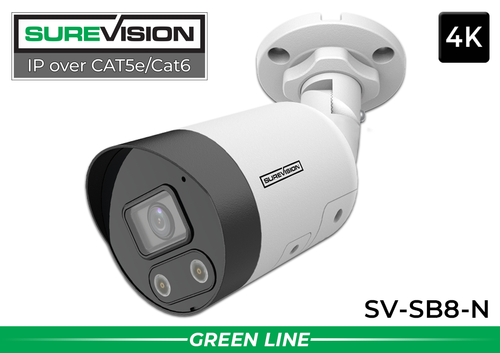
Bullet PoE Cameras
Great for visible deterrence, longer directional coverage, perimeter walls, building edges, parking lanes, and driveways.
Dome PoE Cameras
Popular for ceilings, interior spaces, retail environments, entrances, and places where a compact look is preferred.
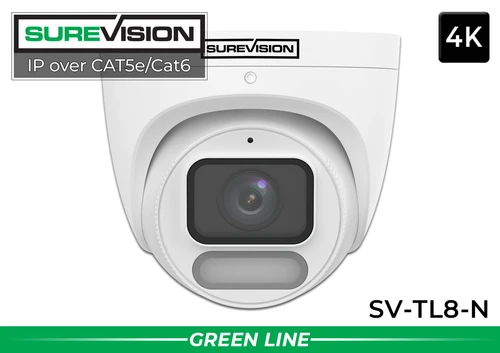
Turret PoE Cameras
A versatile option that combines a clean look with strong image quality and practical positioning flexibility.
PTZ PoE Cameras
Designed for zoom and directional control in larger areas where operators need flexible coverage and active viewing capability.
Explore camera styles in the SureVision IP camera category or browse complete PoE security camera systems when you want cameras and recording matched together.
Featured SureVision PoE Security Cameras
The best PoE camera is not simply the model with the longest feature list. It is the camera whose resolution, lens, night mode, audio and deterrence features fit the exact area you need to protect. These four professional options cover common surveillance goals.


Why Professionals Choose SureVision PoE Security Cameras
SureVision is built for buyers who want more than a basic consumer camera. These are professional surveillance solutions backed by expert support, matched recording options, and the kind of quality serious buyers expect when protecting businesses, warehouses, schools, offices, retail environments, and high-value homes.
Choosing the Right PoE Security Camera System
The right system size depends on how many entrances, exits, hallways, work areas, drive lanes, loading zones, and perimeter areas you need to cover. Many buyers begin with the most obvious camera locations, then add extra coverage for blind spots, parking, storage, and property lines.
Common buying paths:
- 2-camera systems: Focused coverage for one or two entrances, a detached building or another small area
- 4-camera systems: Smaller offices, homes, storefronts and basic perimeter coverage
- 8-camera systems: A popular fit for growing businesses, restaurants and larger homes
- 16-camera systems: Warehouses, schools, industrial sites and larger commercial properties
- 24-camera, 32-camera and 64-camera systems: Multi-building, campus, manufacturing and enterprise surveillance
- Custom systems: Best for buyers who want specific camera mixes, recorder sizes, or advanced coverage goals
Start with complete PoE security camera systems, browse individual SureVision PoE cameras, or match cameras with a SureVision NVR for a custom build.
Frequently Asked Questions About PoE Security Cameras
Are PoE security cameras better than wireless cameras?
For buyers who want dependable 24/7 surveillance, PoE cameras are often the stronger choice because they use a wired connection for stable performance and recorder-based storage.
Do PoE security cameras need power?
Yes, but that power is delivered through the Ethernet cable rather than from a separate plug-in adapter near the camera.
What is the difference between a PoE camera and a regular IP camera?
A PoE camera is an IP camera that supports Power over Ethernet, allowing one cable to carry both power and data.
Do PoE camera systems have monthly fees?
Not when they are set up for local recording with a compatible NVR. That is one of the major benefits of professional PoE security camera systems.
Can PoE security cameras be used outdoors?
Yes. Many PoE cameras are designed for indoor and outdoor use, making them suitable for doors, perimeters, driveways, loading zones, and parking areas.
What does UL Listed mean for a PoE security camera?
UL Listed means the product has gone through recognized safety certification steps that many businesses and professional buyers value. For commercial surveillance, that added level of product confidence can matter when choosing equipment intended for long-term use.
Why does NDAA compliance matter?
NDAA compliance matters because many government, public-sector, and security-sensitive buyers want surveillance equipment that aligns with stricter procurement expectations. It is also important for integrators and businesses that want to avoid future limitations when specifying equipment.
What does ONVIF compliant mean?
ONVIF compliant means the camera is built around an industry interoperability standard for IP-based security products. That helps support compatibility with supported recorders, software, and systems, which is important for flexibility and long-term expandability.
Where should I start if I want a complete PoE security camera system?
The easiest starting point is to browse complete PoE security camera systems or view SureVision IP cameras and SureVision NVRs for a custom solution.
Shop Professional PoE Security Cameras & Systems
Ready to build a professional PoE surveillance system with no monthly fees, reliable wired performance, and premium support? Start with SureVision cameras, matched NVRs, or complete systems built for serious protection.
Need help choosing the right fit? Call 888-653-2288 for expert guidance.