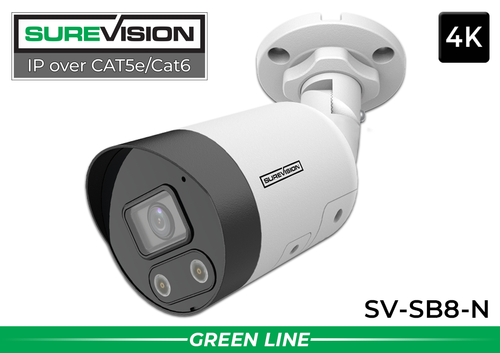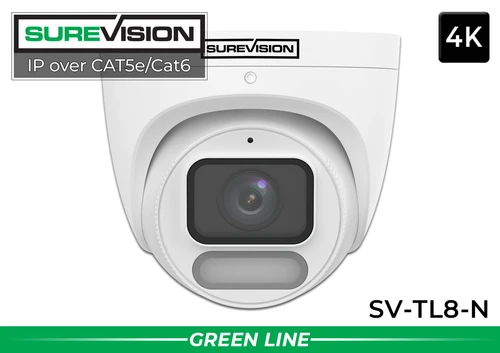
A 4K security camera is a video surveillance camera that commonly records at approximately 3840 × 2160 pixels, or about 8 megapixels per frame. Compared with 1080p security cameras, 4K models capture roughly four times as many pixels. That additional image information can improve recorded detail, digital enlargement and incident review when the lens, viewing distance, lighting, mounting position and recorder settings are properly matched to the scene. Resolution matters, but professional security cameras should never be selected by resolution alone. A successful surveillance design combines the right pixels with the right lens, field of view, nighttime capability, recording equipment and camera placement. In video surveillance, the terms 4K security camera and 8MP security camera are often used interchangeably. A camera producing 3840 × 2160 video delivers approximately 8.3 million pixels in each full-resolution frame. Those pixels can preserve small visual details more effectively than a lower-resolution image when the subject occupies enough of the scene. This may help an authorized user review clothing, packages, vehicles, movement at an entrance or other incident details. However, more pixels do not create unlimited identification distance. If a person is only a tiny portion of a very wide image, even 4K video may not provide the facial detail you expect. A wide 2.8mm lens is excellent for broad nearby coverage, but it is not automatically the correct choice for a narrow target far away. Likewise, a camera aimed into glare, installed too high or surrounded by reflective surfaces can produce disappointing video regardless of resolution. The practical advantage of 4K is that it gives a properly designed system more recorded information to work with. For businesses, this can be valuable at primary doors, registers, inventory areas, loading zones, building exteriors and parking areas. For homes, 4K security cameras can improve useful detail around entrances, garages, driveways, side gates and detached buildings. Government facilities, schools, airports, warehouses and commercial properties may use 4K cameras at high-priority views while combining them with other compatible cameras elsewhere. Approximately 8MP of resolution provides a denser recorded image than 1080p. This can support clearer playback review and more useful digital zoom after an event, provided the original view captured the needed subject detail. Lens selection, mounting height, target distance, lighting, compression, bitrate and recording settings still determine whether the video is actually useful. The strongest security camera is the one matched to its assigned job. Professional 4K security cameras are designed for customers who want reliable, locally recorded video instead of a toy camera that depends entirely on a cloud subscription. When paired with a compatible SureVision NVR, wired PoE cameras can provide continuous or motion-based recording, centralized playback, video export, user permissions and supported remote viewing without a required monthly storage fee. The strongest reason to choose 4K is evidence quality. Higher-resolution video can make it easier to review important characteristics after an incident, particularly when the camera has an appropriate view of the subject. At a retail entrance, that may mean a clearer view of clothing and carried items. At a warehouse, it may improve review of activity around inventory, loading areas or machinery. Outside a home or business, it can preserve better context around vehicles, deliveries and property access. Digital zoom enlarges pixels that were already recorded; it does not add optical detail after the fact. Because a 4K image begins with more pixels than a 1080p image, it generally provides more latitude for enlargement during playback. This is especially useful when an event occurs within a wide camera view and the reviewer needs to inspect one part of the frame. Digital zoom still has limits, so critical distant targets may require a tighter lens, a motorized-zoom camera, PTZ camera or dedicated license plate camera. SureVision 4K IP security cameras use wired Ethernet connectivity and compatible Power over Ethernet. With PoE, one network cable can carry both electrical power and video data between the camera and compatible recording or network equipment. This avoids making the primary camera connection dependent on household Wi-Fi coverage, wireless interference or battery charging. A wired design is especially valuable for 24/7 business security cameras and permanent exterior installations. Connect compatible security cameras to a SureVision network video recorder for centralized local recording to surveillance-grade hard drives. Local NVR storage allows the property owner to control retention capacity, recording schedules and exported evidence. Internet service is generally required for off-site viewing and notifications, but compatible cameras can continue recording locally when the local system remains powered and connected even if internet service is temporarily unavailable. A professional system does not force every location to use the same camera. You can mix compatible bullet, vandal-dome, turret, active-deterrence, full-color, panoramic, PTZ and specialty cameras. This matters because a front door, warehouse aisle, parking lot and lobby do not present the same surveillance challenge. CCTV Security Pros can help match the camera style and recorder capacity to the property instead of treating the megapixel number as the entire design. These real SureVision models cover different surveillance needs. Each product image, model, feature summary and regular price comes from CCTVSecurityPros.com. Check the linked product page for current availability, options and promotional pricing. Pricing notice: Prices shown are regular prices verified September 22, 2026. Promotions, coupon savings, availability and selectable accessories may change. Always use the linked product page as the current source before purchasing. The body style of a security camera affects appearance, mounting, visibility and the kinds of locations where it works best. There is no universally superior housing. The goal is to select the camera that supports the intended scene while fitting the building and installation environment. Bullet IP security cameras have a visible, directional shape that clearly communicates the monitored direction. They are popular on building exteriors, warehouses, parking areas, driveways, loading docks and long walls. A bullet camera can be easy to aim and may offer a longer physical housing for infrared components. The visible design can also provide a basic deterrent effect because visitors can readily see the camera. Dome and turret IP cameras offer a lower-profile appearance that works well under soffits, in stores, offices, restaurants, hallways, lobbies and covered exterior areas. Vandal-dome models can be especially useful where a camera is accessible to the public or needs added physical protection. Turret cameras provide a clean appearance and flexible aiming without a full dome cover over the lens. Active-deterrence cameras do more than passively record. Depending on the model and configuration, they can add visible light, a siren, event-triggered warnings and two-way audio. These features can be valuable at entrances, vehicle gates, loading areas, garages and other controlled access points. Deterrence features should be configured thoughtfully so normal activity does not produce unnecessary alarms. Traditional infrared security cameras generally switch to black-and-white video in darkness. A full-color model uses available ambient light or integrated visible illumination to retain color information after dark. Color can provide useful context—such as the color of clothing, a vehicle or an object—but visible white light may not suit every property. Compare color night vision security cameras based on the actual lighting and whether illumination is acceptable at the location. Wide-angle security cameras can cover broad nearby scenes such as open retail floors, lobbies and large interior spaces. Panoramic cameras may reduce the number of conventional views needed in some layouts, although wide coverage spreads available pixels across more of the scene. For distant objects, moving surveillance views or license plates, consider a PTZ security camera, motorized-zoom model or dedicated license plate camera rather than expecting one wide 4K camera to perform every task. Different resolutions can all have a place in a professional video surveillance system. The best resolution depends on the area, required detail, lighting, storage plan and budget. A thoughtful system may use 4K security cameras at critical identification points and 4MP cameras for closer or lower-priority general coverage. Do not assume that an 8MP camera will always outperform a lower-resolution camera in every nighttime scene. Sensor size, lens aperture, illumination, exposure, compression and motion all affect the finished image. Choose 4K when the extra detail supports a defined objective, then verify that the NVR, network and storage are designed to preserve it. A large percentage of security incidents occur when lighting is difficult, so nighttime performance deserves as much attention as daytime resolution. The most effective night-vision security camera is not necessarily the model with the longest advertised distance. It is the camera whose illumination pattern, lens, mounting position and surrounding environment work together. Infrared LEDs allow security cameras to monitor dark scenes without projecting visible white light. The resulting image is commonly black and white. Smart infrared control can help reduce overexposure when a person moves close to the camera. Infrared is dependable for many exterior and interior locations, but reflective walls, soffits, spider webs, rain, fog and nearby objects can bounce IR light back into the lens and reduce image quality. Color-at-night cameras use low-light imaging, available ambient light or supplemental visible light to retain color. These security cameras may be useful around storefronts, driveways, garages, walkways and entrances where color information matters. Full-color performance depends on the scene. A camera cannot produce natural color in complete darkness without some form of visible illumination, so evaluate streetlights, building lights and the camera's own spotlight before deciding. Wide dynamic range helps a security camera balance bright and dark areas in the same image. Consider a doorway where bright outdoor light appears behind a person standing in a darker interior. Without proper exposure control, the person's face may become a silhouette. True WDR can improve usable detail in challenging entrances, windows, loading doors and other high-contrast scenes. Professional 4K IP cameras are only one part of the system. The recorder, network connection, cabling, hard drives and video settings must support the camera count and desired retention period. A well-designed system preserves 4K evidence consistently and makes recorded video practical to locate, review and export. Power over Ethernet allows compatible PoE security cameras to receive power and transmit network data through one Cat5e or Cat6 Ethernet cable. This simplifies each camera run and provides a stable wired connection. Depending on the recorder model and system design, cameras may connect directly to integrated PoE ports or through compatible PoE network switches. Larger 32-, 64- and 128-channel designs often use separate switching infrastructure rather than assuming every recorder includes one built-in PoE port per camera. A network video recorder must support the selected camera resolution, combined incoming bandwidth, recording settings and analytic features. It should also have enough channels for today's cameras plus reasonable expansion. CCTV Security Pros offers SureVision NVR recorders ranging from smaller systems to large multi-camera applications. Selected SureVision recorders support up to 12MP camera input, allowing them to accommodate compatible 4K cameras while providing centralized recording, playback and management. There is no single storage answer based only on resolution. Storage use depends on the number of cameras, codec, bitrate, frame rate, recording schedule, scene activity and desired retention. Continuous 24/7 recording requires more capacity than event-based recording under the same settings. A busy retail entrance or roadway may generate more motion-based footage than a quiet storage room. H.265 or Ultra 265 compression can reduce storage requirements compared with older H.264 settings, but image quality and compatibility must remain appropriate. Plan retention around the practical needs of the property. A business may want enough days to discover and investigate inventory loss, while a homeowner may prioritize recent events. Surveillance-grade hard drives are designed for continuous video workloads. Use the CCTV Security Pros hard-drive storage calculator or speak with a specialist before selecting capacity for a multi-camera 4K system. Compatible SureVision systems support authorized remote viewing from phones, tablets and computers. Remote access generally requires a working internet connection at the recorder location and a properly configured app or desktop client. The important distinction is that primary video can remain on the local NVR hard drive, avoiding a mandatory monthly cloud-storage subscription. Multiple authorized users can be configured according to the capabilities and permissions of the selected equipment. 4K surveillance is most valuable where recorded detail has a clear purpose. Before selecting cameras, identify what must be seen at each location: general activity, recognition of a familiar person, identification-quality facial detail, vehicle description, transaction context or a broad overview. This objective determines the lens, camera position and required pixel density. Business security camera systems may cover entrances, customer areas, registers, stockrooms, warehouses, employee areas, loading docks and parking lots. 4K security cameras can strengthen high-priority views where incident review, inventory protection or liability documentation matters. A retailer may use a vandal dome at an entrance, a discreet turret above a customer area and a long-range bullet camera outside. A warehouse may combine fixed 4K cameras with PTZ or motorized-zoom cameras for larger spaces. Warehouses present long aisles, high ceilings, large doors, variable lighting and moving equipment. Avoid placing every camera at maximum height simply because mounting is convenient. A lower or more targeted view may capture more useful facial or package detail. Use 4K cameras at loading doors, receiving areas, high-value storage, production lines and other critical points, then design overview coverage around the movement of people and equipment. Retail security cameras must handle entrances, backlighting, customer movement, cash-handling areas and merchandise displays. Dome and turret cameras provide a clean appearance indoors, while bullet or active-deterrence cameras may suit exterior approaches and service areas. Audio-capable cameras can add context where audio recording is legally permitted. Always review federal, state and local privacy and consent requirements before enabling microphones. Outdoor views require careful planning because a wide field can make vehicles and people appear small. 4K resolution helps, but the target still needs enough pixels. Use overlapping camera views where appropriate, control glare from headlights and consider dedicated cameras for choke points. If reliable plate capture is required, use a dedicated license plate solution rather than assuming a general-purpose 4K security camera will capture every moving plate under all conditions. Wired home security cameras can provide dependable local recording around front and back doors, garages, driveways, side access, yards and detached structures. A 4K bullet camera can clearly show its monitored direction, while a dome or turret may blend more naturally beneath a soffit. Position cameras to cover your own property and avoid unnecessary views into neighboring private areas. A recorder with extra channels makes it easier to add cameras later without replacing the system's core. Government and institutional customers may require NDAA-compliant surveillance products, scalable recording, defined user permissions and consistent support. SureVision security cameras and recorders provide professional options for these environments. Larger projects should be planned around network bandwidth, switch capacity, recorder throughput, storage retention, camera groups and expansion—not just the number of cameras printed on the recorder. Modern security cameras can use video analytics to help distinguish people or vehicles from less meaningful scene changes. Smart motion detection can reduce alerts generated by ordinary motion such as leaves, shadows or weather, although no analytic system is perfect. Proper camera angle, target size, lighting and rule configuration remain important. Selected SureVision cameras and NVRs support human and vehicle detection, line-crossing, intrusion or perimeter tools. These features can help a user focus on events that matter, search recorded footage more efficiently and receive more relevant notifications. Analytics should support—not replace—a sound physical security plan. Locks, lighting, access control, procedures and human response remain essential parts of property protection. When comparing AI security cameras, confirm whether the desired feature is processed by the camera, recorder or their compatible combination. Also confirm the number of channels supported for advanced analytics. A marketing phrase such as “AI camera” is less useful than understanding exactly which detection rules are available and how they operate in the intended scene. A strong surveillance system begins with a coverage plan, not a shopping cart. Walk the property and list the critical views. Decide what you must see at each one, measure approximate distances and note daytime and nighttime lighting. Then choose security cameras, recorder channels and storage around those real conditions. If you need cameras, a compatible NVR, local hard-drive storage and system support together, start with a complete SureVision PoE security camera system. CCTV Security Pros offers customizable 2-, 4-, 8-, 16-, 24-, 32- and 64-camera options, with larger professional designs available. Compatible camera types can be mixed so entrances, interiors, exterior areas and specialty views each receive the right coverage. Request free system advice or call 888-653-2288. Our U.S.-based team can help with camera selection, recorder capacity, storage, compatibility and setup before and after the purchase. CCTV Security Pros has served customers since 2008 and has supplied professional surveillance equipment to more than 75,000 customers. Our SureVision line is built for customers who want dependable wired security cameras, local recording, free expert assistance and no required monthly cloud-storage fees. Build around the property using compatible bullet, dome, turret, PTZ, active-deterrence, wide-angle and specialty cameras rather than accepting a one-style-fits-all package. Use compatible SureVision NVRs for local hard-drive storage, playback, export and supported remote viewing without a required monthly viewing or storage subscription. SureVision products include a 3-year warranty and purchases are backed by a 30-day money-back guarantee, subject to the current store terms and conditions. Get knowledgeable help with product selection, NVR compatibility, camera placement, setup and remote viewing from a real U.S.-based team. In professional surveillance, an 8MP security camera commonly records at or near 3840 × 2160, the standard resolution associated with 4K Ultra HD. Verify the exact maximum resolution, frame rate and stream settings on the selected product page. They are often worth it where higher-detail recorded evidence is important, such as entrances, cash-handling areas, loading docks, driveways and other priority zones. Lower-resolution security cameras may still be appropriate for nearby general coverage. Generally, yes. Storage also depends on bitrate, codec, frame rate, recording schedule, scene activity and retention days. H.265 and Ultra 265 compression can reduce storage requirements while maintaining suitable video quality when supported and configured correctly. You need an NVR that supports the selected 8MP camera resolution, total incoming bandwidth, recording settings and desired smart features. Channel count alone does not establish full compatibility. Compatible wired cameras can record locally to an NVR while the local equipment remains connected and powered. Internet service is generally required for remote access, app notifications and off-site system functions. No required monthly fee is needed for compatible local NVR recording or supported remote viewing through the included SureVision software. Internet service and optional third-party services are separate. For permanent multi-camera surveillance, PoE is often preferred because it provides stable wired power and network data over Ethernet. The best choice still depends on the property, cable access and surveillance objective. A general-purpose 4K camera may capture a readable plate under favorable conditions, but reliable plate capture depends on lane width, speed, angle, lighting, shutter settings and distance. Use a dedicated LPR camera for an application where plates are a primary requirement. Yes, when the cameras and NVR are compatible. Many strong systems use 4K at priority views and 4MP cameras for closer general coverage. This can balance detail, storage and overall project cost. Selected SureVision 4K cameras include a built-in microphone, while active-deterrence models may support two-way audio. Audio laws vary by jurisdiction, so confirm legal requirements and provide any required notice before enabling recording. The best camera is the model that matches the required view. The SV-B8IR-N is a strong general-purpose bullet camera; the SV-BA8-N adds longer infrared range; the SV-VP8-N provides a vandal-dome housing; and active-deterrence models add lights, sirens and two-way audio. Count every important entrance, interior zone, exterior approach, parking or driveway view, loading area and blind spot. Then select an NVR with enough channels for today's cameras and reasonable future expansion. Shop professional SureVision 4K security cameras online or talk with a knowledgeable U.S.-based surveillance specialist. We can help you compare camera styles, night vision, audio, active deterrence, recorder capacity and storage for your property.What Is a 4K Security Camera?
Understanding 4K Security Cameras Beyond the Megapixel Number
4K Means More Recorded Pixels
4K Does Not Replace Proper Design
Why Choose Professional 4K Security Cameras?
More Useful Detail During Recorded Playback
Better Digital Enlargement of the Original Image
Professional Wired Reliability
Local Recording With No Required Monthly Fees
Flexible Camera Choices for Different Areas
Featured SureVision 4K Security Cameras
Choosing the Right Type of 4K Security Camera
4K Bullet Security Cameras
4K Dome and Turret Security Cameras
Active-Deterrence Security Cameras
Full-Color Night Security Cameras
Wide-Angle, Panoramic and Specialty Cameras
4K vs. 4MP vs. 1080p Security Cameras
Resolution Class
Approximate Pixels
Typical Strength
Planning Consideration
1080p / 2MP
1920 × 1080
Basic general surveillance and existing compatible systems
Less enlargement detail than higher resolutions
4MP
Approximately 2560 × 1440
Strong balance of image detail, bandwidth and storage
Often sufficient for nearby or moderately sized scenes
4K / 8MP
Approximately 3840 × 2160
Higher-detail evidence video and greater digital enlargement latitude
Requires compatible recording capability and generally more storage
Night Vision: The Feature That Can Make or Break 4K Video
Infrared Night Vision
Color-at-Night and Full-Color Video
Wide Dynamic Range for Entrances
Mounting Practices for Better Night Video
PoE, NVR Recording and Storage for 4K Security Cameras
Why Power over Ethernet Is Valuable
Choosing a Compatible NVR
How Much Storage Do 4K Cameras Need?
Remote Viewing Without Required Cloud Storage
Best Applications for 4K Security Cameras
Business and Commercial Security Cameras
Warehouses and Industrial Facilities
Retail Stores and Restaurants
Parking Lots, Driveways and Building Perimeters
Professional Home Security Cameras
Government, Schools and Larger Properties
AI Detection and Smart Video Features
How to Plan a Professional 4K Security Camera System
Build a Complete SureVision 4K System
Why Buy 4K Security Cameras From CCTV Security Pros?
Mix-and-Match Camera Designs
Local Recording and Remote Access
Professional Product Protection
Lifetime U.S.-Based Support
Frequently Asked Questions About 4K Security Cameras
Are 4K security cameras the same as 8MP cameras?
Are 4K security cameras worth the additional cost?
Do 4K security cameras use more storage?
Do I need a 4K NVR?
Can 4K cameras work without internet service?
Do your 4K security cameras require monthly fees?
Are wired PoE cameras better than Wi-Fi cameras?
Can a 4K security camera capture license plates?
Can I mix 4K and 4MP security cameras?
Do 4K cameras record audio?
What is the best 4K security camera?
How many security cameras do I need?
Choose the Right 4K Security Cameras the First Time