

Security Camera Placement Guide for Homes and Business
Posted by Gregory Derouanna, MBA on Mar 6, 2026
Security Camera Placement Guide for Homes and Businesses
Installing security cameras in the right locations is one of the most important parts of building an effective surveillance system. Even the most advanced cameras cannot protect your property if they are installed in the wrong places.
This guide explains the best security camera placement for homes and businesses, including where to install cameras for entrances, driveways, parking areas, and perimeter coverage.
Best Security Camera Placement for Homes
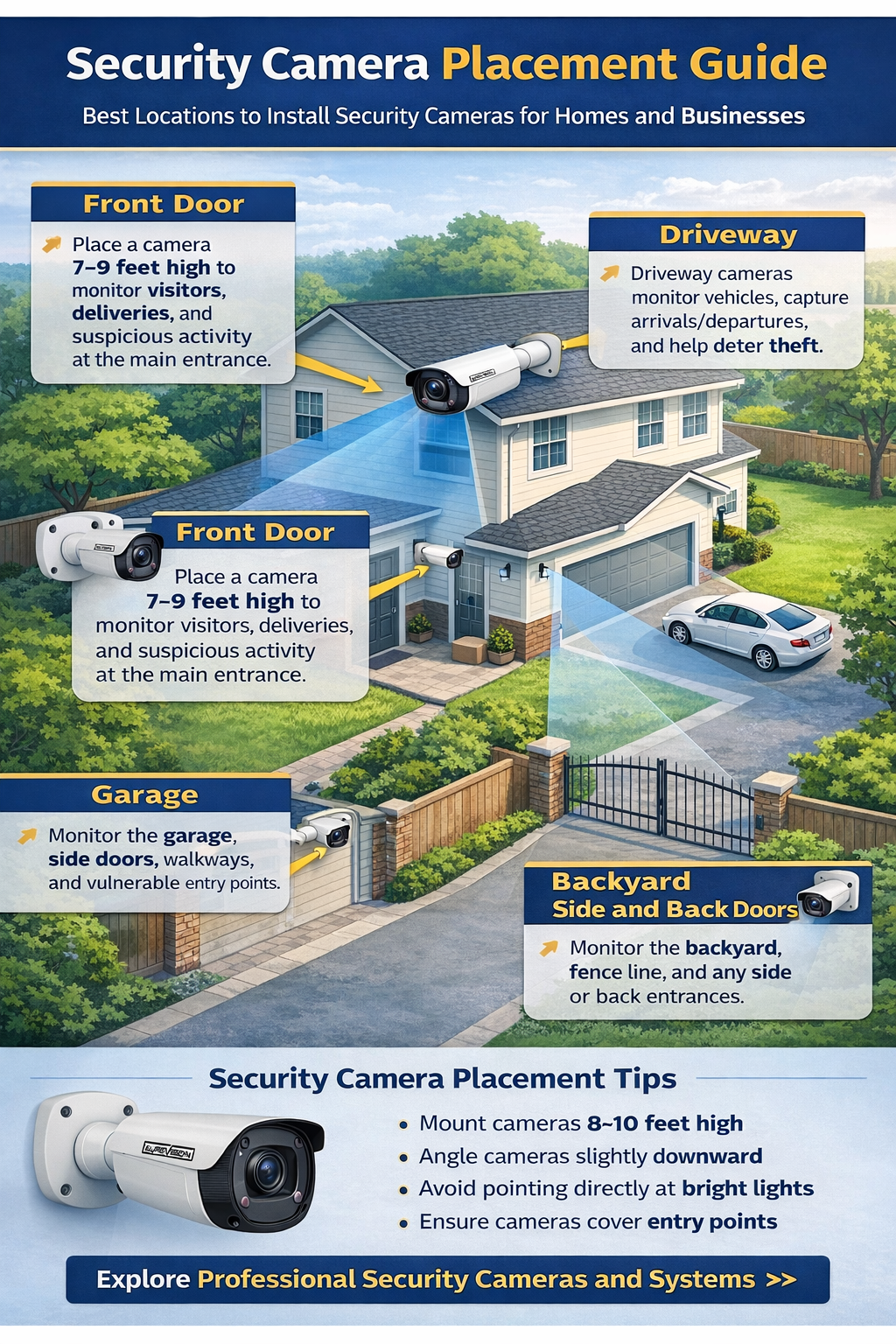
Most residential security systems should focus on monitoring entry points and areas where activity occurs. Cameras should cover entrances, vehicles, and backyard access points.
Front Door
Your front door is the most important camera location. A front door camera helps capture visitors, deliveries, and suspicious activity at the main entrance.
- Install cameras 7–9 feet high
- Angle cameras slightly downward
- Avoid pointing cameras directly at sunlight
Driveway
Driveway cameras monitor vehicles entering and leaving your property. They also help identify visitors and capture important activity near the home.
A camera with a balanced viewing angle such as a 4mm lens works well for driveway monitoring.
Backyard and Side Yard
Backyards and side entrances are common entry points for intruders. Cameras should monitor fence lines, back doors, and gate access points.
- Cover backyard entrances
- Monitor fence gates
- Use night vision cameras for low-light coverage
Garage and Side Doors
Many break-ins occur through side doors and garages. Installing cameras near these areas ensures that all entry points are monitored.
Best Security Camera Placement for Businesses
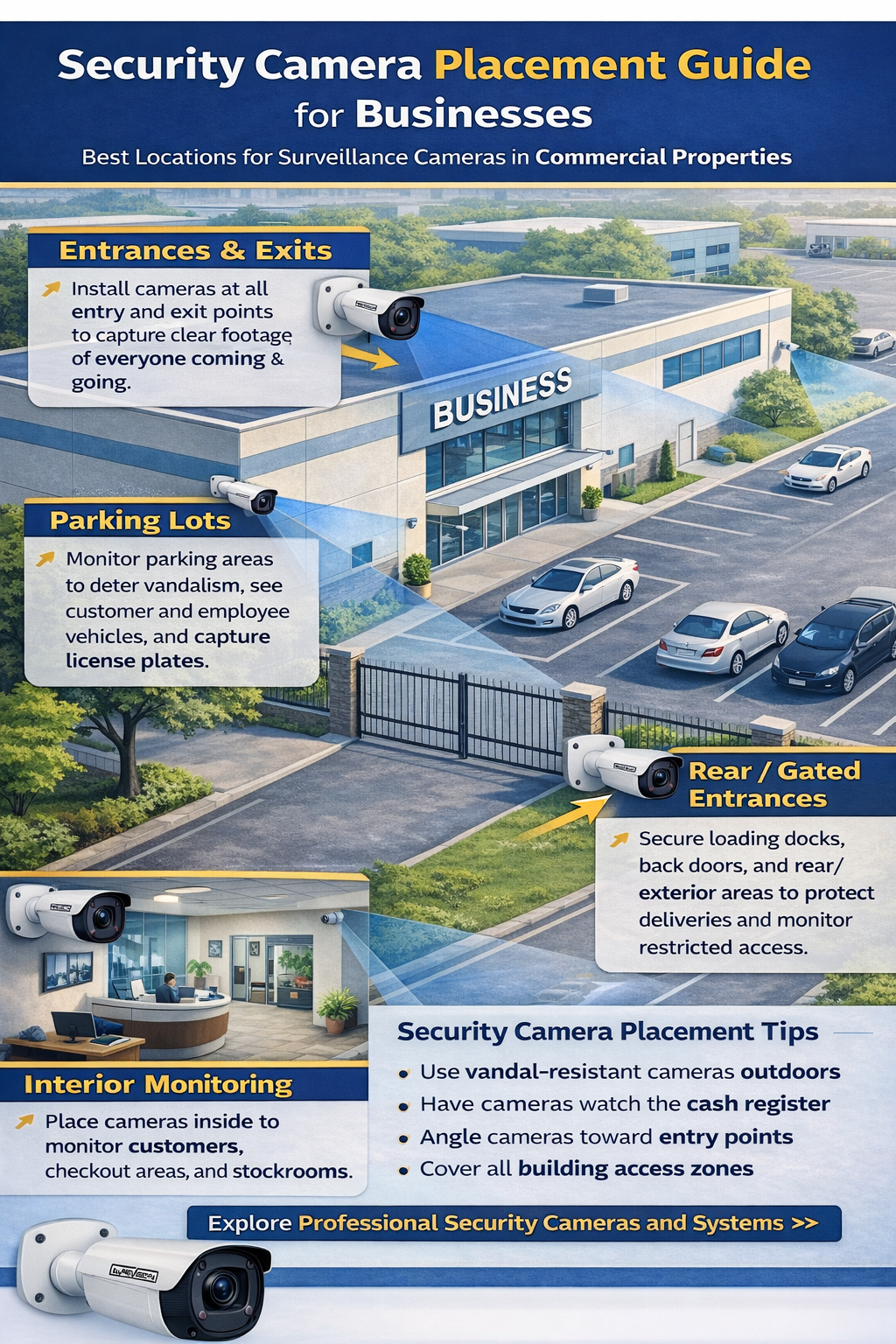
Commercial security camera systems should focus on monitoring customer areas, entrances, parking lots, and restricted access points.
Entrances and Exits
Install cameras at every entrance and exit to capture clear footage of everyone entering or leaving the building.
- Main entrance doors
- Employee entrances
- Emergency exits
Parking Lots
Parking lot cameras help deter theft and vandalism while monitoring vehicles entering and leaving the property.
These cameras should cover the entire parking area while maintaining clear visibility of vehicle movement.
Rear Entrances and Loading Areas
Back doors, delivery areas, and loading docks are often targeted because they are less visible than the front of a building.
Cameras should monitor deliveries, employee access, and restricted zones.
Interior Monitoring
Interior cameras help monitor customer areas, checkout counters, and storage rooms.
- Reception areas
- Cash registers
- Inventory rooms
- Employee entrances
Security Camera Placement Tips
- Mount cameras between 8 and 10 feet high
- Angle cameras slightly downward
- Avoid pointing cameras directly into bright lights
- Cover all building entry points
- Overlap camera views to eliminate blind spots
Choosing the Right Security Camera System
A professional security camera system combines the right cameras with proper placement to provide full property coverage.
Explore our professional surveillance options:
Professional Security Cameras
Complete Security Camera Systems
Network Video Recorders (NVRs)
Conclusion
The most effective surveillance systems are designed around proper camera placement. By covering entrances, driveways, parking areas, and perimeter access points, security cameras can help protect both homes and businesses.
When cameras are installed in the correct locations, they provide clear footage, reduce blind spots, and significantly improve overall security coverage.
