
Wireless Solar Security Camera
SureVision Wireless Security Cameras
Shop professional SureVision wireless security cameras for locations where a traditional PoE cable run is unavailable or impractical. This specialized subcategory of our SureVision security cameras includes Wi-Fi cameras for properties with reliable wireless coverage, 4G LTE cameras for sites with cellular service, and a commercial solar camera system for remote locations without dependable power or internet.
Choose the connection method that matches the property. Wi-Fi cameras still require electrical power and a strong local network. LTE cameras require a compatible SIM card, cellular coverage and an active data plan. The SureVision solar 4G LTE system combines cellular connectivity with a solar panel and battery for gates, farms, construction sites, equipment yards and other off-grid monitoring applications.
We’re happy to help you choose.
Want to swap one or two cameras or talk through the value? Our U.S. experts can help you choose, order and install your system.
Real people. Expert help.
Customer feedback about CCTV Security Pros
“Excellent. Spent extra time explaining how each of our needs would be met by the system they put together for us. Extremely professional.”
Wireless Security Cameras for Wi-Fi, Cellular and Off-Grid Locations
Wireless security cameras are not all built the same way. Some transmit video through a local Wi-Fi network, while others use 4G LTE cellular service. A solar security camera system adds a solar panel and battery so the camera can operate where a permanent electrical connection is not practical. Understanding those differences is the first step toward choosing equipment that will work reliably at the property.
SureVision wireless cameras are designed for specialized monitoring needs beyond a standard wired PoE installation. They can help protect remote gates, farms, ranches, job sites, equipment yards, cabins, storage areas and other locations where Ethernet cabling or conventional internet service may be difficult to provide. Depending on the model, available features include HD video, night vision, built-in audio, remote phone viewing, smart event detection and optional local microSD recording.
This page is a focused subcategory of our main SureVision IP security camera selection. Use it when the installation specifically requires Wi-Fi, cellular or solar operation. For most powered buildings that need multiple cameras recording around the clock, a wired PoE camera system with an NVR remains the preferred design because it provides centralized storage and avoids reliance on wireless signal quality. CCTV Security Pros can help compare both approaches for the property.
Compare SureVision Wireless Camera Options
| Camera type | Connection | Power | Best use | Important requirement |
|---|---|---|---|---|
| Wi-Fi security camera | Local wireless router or access point | Electrical power is still required | Homes, offices and smaller powered properties with strong Wi-Fi | Reliable signal at the exact camera location |
| 4G LTE security camera | Cellular network through a compatible SIM card | Compatible 12V power source | Gates, yards, rural property and sites without ordinary internet | Cellular coverage and an active data plan |
| Solar 4G LTE camera system | Cellular network through a compatible SIM card | Included solar panel and battery system | Remote and off-grid sites without nearby power or Wi-Fi | Suitable solar exposure, cellular service and correct installation |
| Wired PoE camera | Ethernet cable to a compatible NVR or network | Power and data through supported PoE | Permanent multi-camera systems with continuous local recording | Ethernet cable route and compatible PoE equipment |
The word “wireless” describes the communication path; it does not necessarily mean wire-free. A Wi-Fi camera normally needs a power cable. A standalone 4G LTE camera also needs power unless it is paired with a suitable solar and battery system. The complete solar option is the category's true off-grid solution for locations where both network cabling and utility power are unavailable.
Featured SureVision Wireless Cameras
These three SureVision options address different installation conditions. Images are intentionally kept compact so the section supports the buying guide without overwhelming the product grid above.
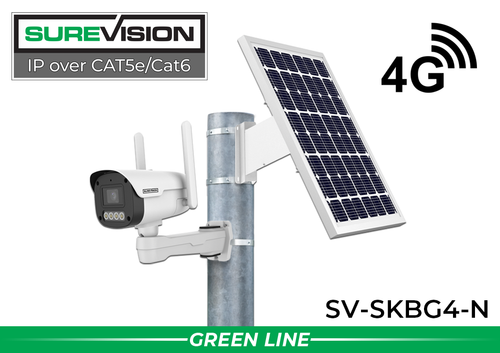 Solar + Cellular
Commercial Solar 4G LTE Security Camera System
A complete remote-monitoring package with a 4MP LTE camera, 60W solar panel and 320Wh lithium battery. Designed for focused off-grid coverage where power and Wi-Fi are unavailable.
- 4MP 2K video
- 4G LTE remote connection
- Up to 164-foot infrared range
- Built-in microphone and speaker
- Optional microSD recording
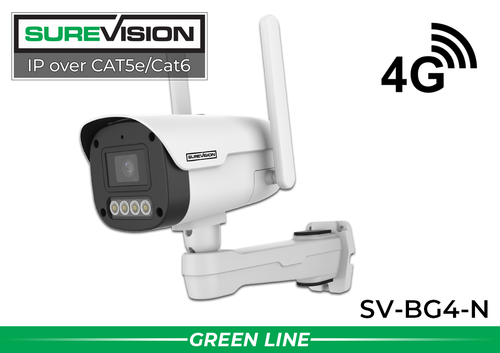 Cellular Camera
SureVision 4G LTE Security Camera
A professional cellular security camera for powered locations without Wi-Fi. It uses a compatible Nano-SIM and cellular data plan for remote viewing.
- 4MP video
- No local Wi-Fi required
- Dual-light night viewing
- Two-way audio
- Optional onboard storage
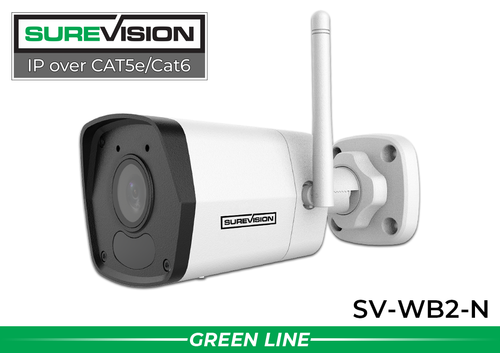 Wi-Fi Camera
SureVision Wireless Bullet Security Camera
A powered Wi-Fi bullet camera for properties with strong wireless coverage. Suitable for targeted monitoring where running a network cable is difficult.
- 2MP 1080p video
- Wi-Fi video connection
- Wide fixed-lens view
- Infrared night vision
- Built-in microphone
Commercial Solar 4G LTE Security Camera System
The SureVision SV-SKBG4-N solar security camera system is built for remote locations where trenching cable, installing an internet connection or extending electrical power would be difficult. It combines a 4MP 4G LTE security camera with a 60W solar panel and 320Wh lithium battery. With proper installation, solar exposure and cellular service, it provides a focused surveillance solution for a gate, driveway, job-site entrance, equipment area or other off-grid location.
The camera uses a compatible SIM card and cellular data plan for remote connectivity. It does not depend on Wi-Fi, but it is not free of communication costs: the cellular provider controls the data plan and service availability. The installation location should be checked for carrier signal strength before equipment is selected. The solar panel also needs suitable exposure, correct orientation and a mounting position that avoids excessive shade.
4MP 2K Video
The camera records up to 2560 × 1440 resolution, providing more detail than standard 1080p for focused remote monitoring.
4G LTE Connectivity
A compatible Nano-SIM connects through supported cellular service, making remote access possible without a local Wi-Fi network.
Solar Panel and Battery
The included 60W panel and 320Wh lithium battery are designed to support remote operation when installed with adequate sun exposure.
Night Viewing
Infrared illumination is rated up to 164 feet, with warm-light support available for closer nighttime scenes under suitable conditions.
Two-Way Audio
A built-in microphone and speaker support listening and voice communication when the connection and application configuration allow it.
Optional Local Storage
MicroSD recording can preserve video at the camera without requiring an NVR at the remote location. Capacity and recording time depend on settings and activity.
Best Places to Use a Solar or 4G LTE Security Camera
Construction Sites
Monitor a gate, delivery point, equipment area or materials zone before permanent utilities and network infrastructure are available. The camera can move with the project when properly remounted and reconfigured.
Farms and Ranches
Watch remote barns, access roads, feed storage, fuel tanks, livestock areas or field entrances that are beyond the reach of the property's ordinary Wi-Fi network.
Remote Gates and Driveways
See vehicles and visitors at an entrance without trenching a long network cable. Position the camera for the desired overview or identification distance.
Equipment and Storage Yards
Provide focused coverage of machinery, trailers, vehicles, tools and material storage where permanent buildings or utility power are unavailable.
Cabins and Remote Buildings
Check an isolated structure with cellular coverage even when cable internet is unavailable. Evaluate seasonal shade, weather and accessibility before selecting the mount.
Temporary Monitoring
Use the system for a defined project, event or changing work zone, then relocate it when the monitoring need moves. Every new site still requires a fresh signal and solar assessment.
Wi-Fi Security Cameras: What Wireless Really Means
A Wi-Fi security camera sends video through a wireless network rather than an Ethernet cable, but it still needs a dependable source of electrical power. This distinction is important when planning outdoor placement. A camera may be within range of the router but still lack a safe, practical power connection. Conversely, an electrical outlet may be available where the Wi-Fi signal is too weak for reliable video.
Before installing a Wi-Fi camera, test the actual signal at the intended mounting height and location. Exterior walls, metal buildings, masonry, distance, other wireless networks and changing environmental conditions can reduce performance. A phone showing a Wi-Fi symbol near the location is not a complete test of the camera's long-term upload stability.
Wi-Fi models can be useful for a single entrance, detached interior space or other targeted area where cabling is difficult and wireless coverage is strong. They are less suitable for a large, permanent multi-camera deployment that requires dependable continuous recording. In those situations, browse professional SureVision PoE cameras or complete security camera systems.
4G LTE Security Cameras Without Wi-Fi
A 4G LTE security camera connects through cellular service instead of a local router. This makes it valuable for remote properties, rural sites, construction areas and gates where standard internet is not available. The camera requires compatible cellular coverage, a supported SIM card and an active data plan. Signal strength and carrier compatibility should be confirmed for the exact installation address.
The standalone SureVision LTE camera is appropriate when suitable power already exists. It can use a compatible 12V source and provides remote viewing, two-way audio, dual-light nighttime support and optional onboard storage. If the site also lacks power, choose the complete solar configuration rather than assuming the camera alone can operate indefinitely from a small consumer solar accessory.
Remote cellular viewing consumes data. Live viewing, playback, high-resolution streams and frequent activity can increase usage. Configure event detection, stream quality and recording behavior around the surveillance goal and data plan. Local microSD recording can reduce dependence on continuous cloud transmission, but stored footage and camera access still require thoughtful security and retention planning.
Solar Camera Installation Planning
- Confirm cellular coverage. Check carrier service at the exact mounting location and height. A nearby property having service does not guarantee reliable performance at the camera.
- Evaluate year-round sunlight. Consider trees, buildings, terrain, seasonal sun angles, weather patterns and debris that may shade or obstruct the panel.
- Choose the monitoring objective. Decide whether the camera must observe a wide area, recognize activity or identify a person or vehicle at a specific point.
- Plan secure mounting. Use a stable surface and appropriate hardware for the camera, solar panel and battery assembly. Account for wind exposure and tampering risk.
- Aim the panel and camera separately. The best solar orientation may not match the best camera view. Plan both placements without compromising the surveillance target.
- Configure recording and alerts. Select motion zones, smart detection settings, schedules and microSD storage according to the location's activity level.
- Protect remote access. Use strong unique credentials, limit user permissions and keep supported software and device firmware current.
- Schedule physical inspections. Remote viewing does not replace checking mounts, connections, panel cleanliness, vegetation, battery condition and camera aim.
Wireless vs. Wired SureVision Cameras
Wireless products solve infrastructure problems, but they are not automatically better than wired cameras. A wired PoE camera system is usually the stronger option for homes, businesses and government facilities with reliable power and a practical Ethernet pathway. PoE provides a consistent network connection and centralized NVR recording while carrying power and data over one supported cable run.
Choose wireless when the installation condition justifies it: Wi-Fi for a powered location with excellent coverage, cellular for a powered site without local internet, or solar plus LTE for a remote location without dependable power or internet. Choose wired PoE when the property needs multiple cameras, continuous recording, centralized storage, straightforward expansion and the highest day-to-day connection stability.
SureVision Wireless Security Camera FAQs
Do wireless security cameras need power?
Usually yes. A Wi-Fi or standalone LTE camera requires a suitable power source. The complete solar LTE system includes a solar panel and battery for properly planned off-grid operation.
Does a 4G LTE camera need Wi-Fi?
No. It uses a compatible cellular network rather than a local Wi-Fi router. It still requires an active data plan and usable carrier coverage.
Does the solar camera require a monthly fee?
The camera does not require a monthly viewing subscription from CCTV Security Pros, but cellular operation requires a compatible SIM card and data plan from a carrier.
Can the solar security camera record locally?
The SureVision solar LTE camera supports optional microSD storage. Recording duration depends on card capacity, resolution, event frequency and recording settings.
Will a solar security camera work in the shade?
Reliable operation depends on adequate solar exposure and correct installation. Heavy or prolonged shade can reduce charging performance, so the site should be evaluated before installation.
Can I view a SureVision wireless camera on my phone?
Supported models provide remote app viewing after the camera, account and network or cellular connection are properly configured.
Is a cellular camera completely wire-free?
The cellular connection removes the need for Wi-Fi or Ethernet, but the camera still needs power. Pair it with the complete solar system when utility power is unavailable.
Is Wi-Fi or LTE better for a remote gate?
Use Wi-Fi only when a strong, dependable network reaches the camera. LTE is often more practical when cellular service exists but the property's Wi-Fi does not reach the gate.
Can one solar camera replace a complete security system?
It can provide focused coverage at one remote location. A multi-camera wired system is better when a building needs continuous recording across entrances, interiors, parking and other critical areas.
What should I check before ordering?
Confirm power availability, Wi-Fi or cellular coverage, solar exposure, viewing distance, storage needs, mounting conditions and whether the selected product matches the required monitoring goal.
Choose the Right SureVision Wireless Camera
Match the camera to the site's power, Wi-Fi, cellular coverage, solar exposure and recording requirements. CCTV Security Pros can help you compare a Wi-Fi camera, standalone 4G LTE camera, commercial solar camera system or wired SureVision PoE system.