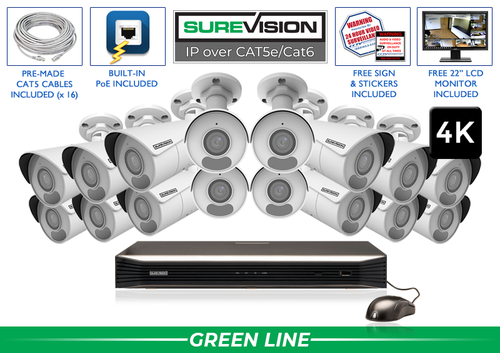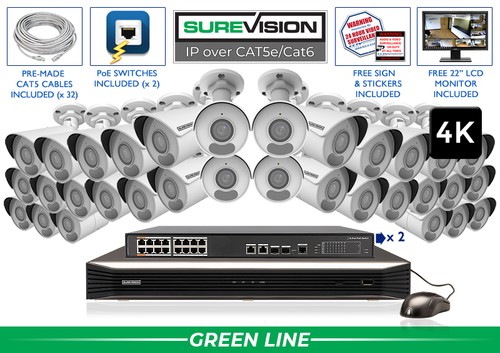
Professional property surveillance since 2008 Plan professional coverage for arrivals, shared routes, deliveries and parking—with local recording and a free remote viewing app. A useful hotel camera system helps staff understand an event across the property. A guest arrives, crosses the lobby and continues toward an elevator. A delivery moves from the loading area into storage. Plan connected views of these shared routes, with recordings that an authorized manager can find quickly. Complete 4K camera systems Start with a value-focused SureVision 4K PoE kit, then match the camera positions to your layout. These complete systems bring cameras, local recording, storage and camera cables together. Choose cable lengths and storage for the job when ordering. Need different camera styles or a tighter view? Our team can help customize the kit around your business. Start outside the main entrance and trace the route to reception, elevators and shared corridors. Add side entrances and the routes staff use throughout the day. An overview helps connect the sequence; a closer view at an important interaction can provide the useful detail that an expansive lobby image misses. Walk the property during a busy arrival period. Luggage carts, groups waiting at reception and open doors can hide an otherwise useful view. Decide what each camera should show when the hotel is operating normally, then write that purpose beside its location on a simple plan. A front-desk view should show the interaction and its surrounding context. Aim for a clear approach and counter area while avoiding unnecessary views of screens or documents. Check the effect of bright entrance glass, decorative lighting and people standing between the camera and the counter. Run a normal arrival and a delivery handoff as tests. Review saved video at the size staff will use to investigate an event. Check that the clock matches operational records and that someone can find the sequence using the time and area. Add a separate approach view if the counter position blocks the arrival. Next step: Record a normal test event and review the saved result before final mounting. Parking coverage should connect to the walk toward the building. Shared corridors need views that explain movement around corners, elevators and access transitions. In back-of-house areas, focus on service doors, supply access and delivery staging rather than spreading cameras across locations without a clear purpose. Keep views outside guest rooms and other private spaces. Check door swings, maintenance carts and the usual positions of stored goods. Where an elevator car needs coverage, plan that installation separately with the appropriate building specialists instead of treating it as an ordinary fixed hallway cable run. Dome and turret styles can suit a finished lobby or shared corridor. An exterior bullet camera can suit a parking approach or service entrance. The best fit combines the intended view, available light, target distance and mounting surface with a housing appropriate to the location. Use a motorized varifocal lens when refining a selected approach after mounting is useful. A PTZ can add active observation across a larger exterior area, while fixed cameras keep recording assigned entrances. Test the actual target in the saved image before deciding a wide view provides enough detail. A hotel remains active beyond office hours. Separate ordinary guest arrivals from events that deserve a notification, such as activity at a restricted service approach. Choose cameras and recorder functions that support the detection areas, human detection or perimeter tools your plan needs, then configure their schedules around real operations. Assign authorized users appropriate viewing, playback and export permissions. Identify who receives alerts on each shift and who follows up. Test an expected authorized arrival and the event you want to flag. Keep recording schedules separate from phone notifications so routine alert changes do not create missing footage. Next step: List the events, responsible users and notification hours, then test recording and alerts separately. Choose a recording-history target around guest follow-up, shift changes and the time it takes management to receive a report. Include weekends and periods when a manager is off site. Camera count, video settings, activity and the recording schedule affect retention. Count planned views and near-term additions before choosing recorder capacity. Check PoE ports and any separate switches as well as the channel count. Use the recording storage calculator, then confirm the history after the system has operated normally. SureVision systems combine local NVR recording with a free viewing app and no required monthly viewing fees. Internet at the property supports access from outside the site. A properly configured local camera network can record independently of that internet connection. Test a guest arrival, a service delivery and an evening parking-to-lobby route. Have an authorized manager find the sequence across cameras, check the timestamps and export useful context. Check remote access using cellular data, review recorded footage and open an exported clip on another device. Leave the owner with the account and recovery information needed to manage the system. For a compact property, begin with the main entrance, reception, a shared access route and a service or parking approach. Count additional floors, entrances and blocked routes separately. A larger hotel may need a recorder beyond these starting kit sizes; choose it from the full camera plan. For a new wired installation, start with matched SureVision IP cameras and an NVR. Choose storage, cable lengths, mounting accessories and powered connections together. CCTV Security Pros has supplied professional surveillance equipment since 2008, with a 3-year limited warranty and unlimited USA support for SureVision. Share a layout and your recording-history target for help selecting a complete system. Continue with the lens guide, PoE installation guide and recording storage calculator. Send your layout, important camera jobs and recording-history target. Our team can help match a complete system to the property.Hotel Security Camera Systems: Clear Coverage Across Every Shift
Popular Business Systems
In this guide
1. Follow arrivals through the shared spaces
A practical coverage plan
Area
Camera job
Check during setup
Lobby and front desk
Arrival and the public check-in interaction
Test queues, luggage and daylight through entrance glass.
Shared corridor
Movement between common access points
Check corners and keep views outside private guest spaces.
Service entrance
Deliveries and access to supplies
Test with carts and goods staged normally.
Parking approach
Movement from vehicles toward the entrance
Check the route after dark with parked vehicles present.
Amenity entrance
Access to a shared facility
Test opening and closing routines without viewing private areas.
2. Frame the front desk for useful incident review
3. Connect parking, corridors and service access
4. Choose the lens and camera style for each setting
5. Make alerts useful across changing shifts
6. Choose NVR channels and recording history
7. Use free remote viewing and test the full workflow
8. Build a complete system around your layout
Look for the logo, expect the quality.Plan your hotel camera system with the Pros
Free Viewing AppNo Monthly Viewing Fees3-Year WarrantyUnlimited USA Support