
Dome Security Camera Guide: Top Benefits and Features
Nov 26, 2026
Most people assume a security camera is just a passive observer, but the right hardware can actually stop a crime before it happens. You've likely felt the frustration of grainy night footage or the sting of a "free" system that actually costs hundreds in monthly fees. We understand that protecting your property should be straightforward and cost-effective. We're here to help you master the technical nuances of the dome security camera so you can secure your facility with professional-grade hardware that doesn't come with a subscription bill. You deserve a system that works as hard as you do without the hidden overhead.
In this guide
- What is a Dome Security Camera and Why Choose One?
- Essential Features for Professional-Grade Dome Surveillance
- Dome vs. Bullet: Selecting the Right Form Factor
- Maximizing Coverage: Strategic Placement and Installation
- Why CCTV Security Pros is Your Professional Partner
- Take Control of Your Property's Security Today
- Choose a dome installation around appearance and service access
- Turn the plan into a complete equipment list
- Real products to compare for your project
- Frequently Asked Questions
In this guide, we'll explore why these discreet units are the gold standard for high-traffic areas. We'll cover everything from IK10 vandal resistance to the latest 4K resolution standards that provide forensic-grade evidence. You'll learn how to select the right equipment for your specific environment and how our team provides the unlimited, lifetime technical support you need to get up and running quickly. By the end, you'll have the expertise to build a robust security perimeter with total confidence in your hardware and your partner.
Key Takeaways
- Choose the equipment around the actual recording task and operating conditions. Review the specified storage, camera lens, image settings and environment, then test a recorded event at the required distance. Use the manufacturer’s documented limits and the organization’s acceptance criteria to evaluate the result.
- Discover why the discreet profile and tamper-resistant design of a dome security camera make it the superior choice for high-traffic or low-ceiling environments.
- Understand the strategic differences between dome and bullet cameras so you can choose the right form factor based on your specific visibility and surveillance goals.
- Master the basics of site surveys and mounting heights to reduce blind spots, backed by our commitment to unlimited lifetime technical support.
- Find out how to secure your facility with professional-grade hardware that offers total ownership with zero monthly subscription fees and a 3-year warranty.
What is a Dome Security Camera and Why Choose One?
A dome security camera is defined by its circular, transparent protective housing. This design isn't just a stylistic choice; it's a functional engineering solution for high-stakes environments. While many people recognize the shape, they often overlook the technical sophistication inside. We've seen these units become the standard for professional installations because they offer a blend of durability and discretion that other form factors can't match. When you choose a dome, you're investing in a hardware style that prioritizes low-profile monitoring without sacrificing image quality.
The "discreet factor" is a primary reason businesses prefer these cameras. Unlike a bullet camera that clearly points in one direction, a dome camera makes it difficult for an intruder to see exactly where the lens is focused. This creates a psychological deterrent through uncertainty. If a person can't identify the camera's blind spots, they're much less likely to attempt a breach. To see how these units integrate into a complete security layout, you can explore our professional IP cameras to find the specific hardware that fits your facility's needs.
Key Advantages for Commercial and Residential Use
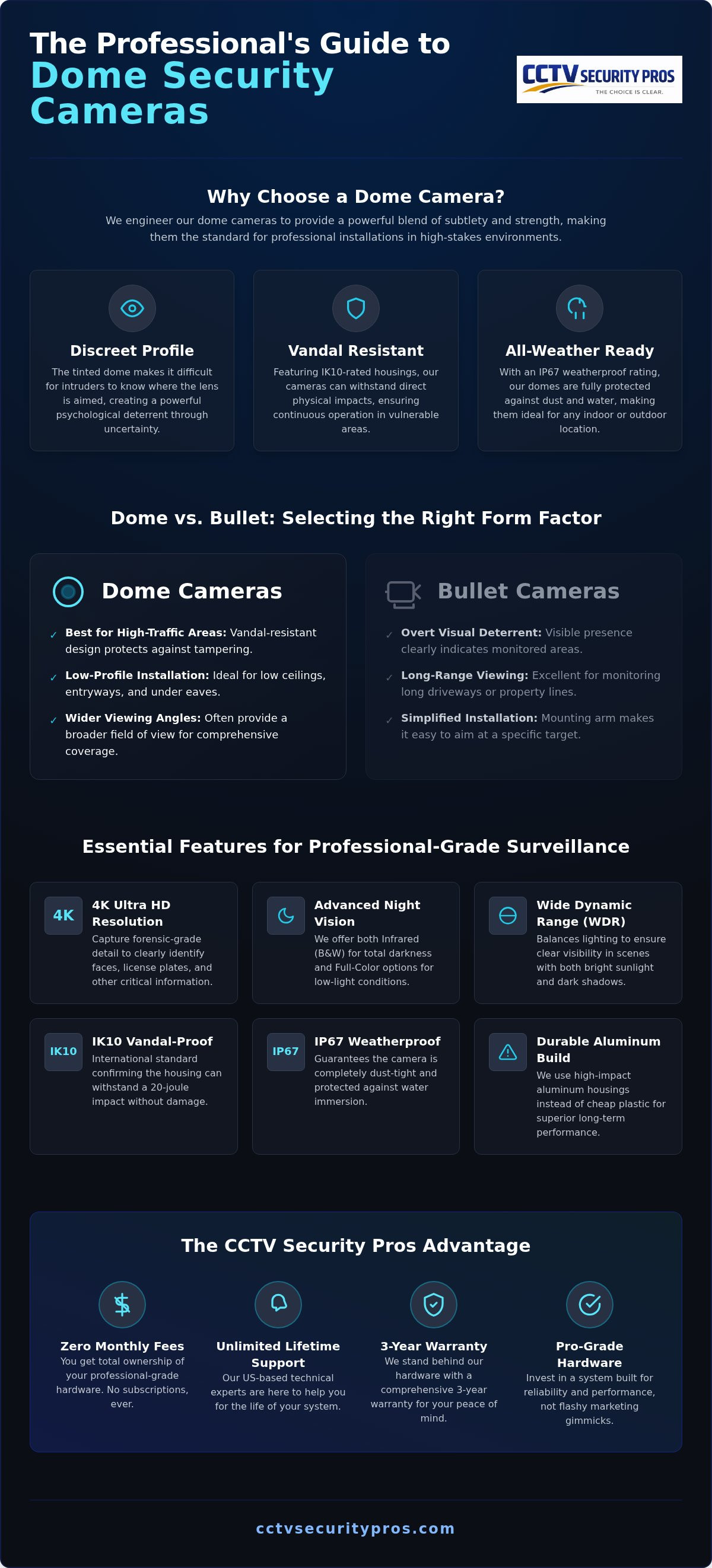
Domes are built for resilience. Most of our professional models feature an IK10 vandal-resistant rating, which means the housing can withstand direct physical impacts that would disable other cameras. Their compact footprint allows them to tuck neatly into corners or under eaves, making them ideal for both indoor ceilings and outdoor entryways. We ensure our equipment is fully weatherproof to handle diverse national climates, providing absolute reliability regardless of your location.
Common Misconceptions About Dome Surveillance
It's a mistake to think dome cameras are only for indoor use or that they have a limited range. Modern dome hardware offers the same 4K high-definition resolution and long-distance infrared capabilities as any other professional form factor. We've helped many customers realize that a dome doesn't mean a compromise in performance. Whether you need wide-area coverage or forensic-grade detail, these units deliver the high-specification results required for modern security without being an eyesore on your property.
Essential Features for Professional-Grade Dome Surveillance
While many consumer cameras focus on flashy marketing, professional-grade hardware focuses on data integrity. We recommend 4K resolution for modern security because it provides the forensic detail necessary to identify faces or license plates at a distance. A dome security camera equipped with 4K sensors ensures that your footage remains actionable when it matters most. Beyond resolution, you must consider night vision performance. Traditional infrared (IR) provides reliable black-and-white images in total darkness, while full-color night vision utilizes high-sensitivity sensors to maintain color detail in low-light conditions, offering a more complete picture of an event.
Advanced Imaging and Sensor Technology
Professional surveillance requires more than just high pixel counts. Digital Noise Reduction (DNR) filters out the graininess that often plagues low-light footage, resulting in a cleaner image and smaller file sizes on your recorder. Wide Dynamic Range (WDR) is another critical component for balanced exposure. WDR technology balances the lighting in a single frame to ensure that both bright areas and dark shadows are clearly visible, which is vital for entryways with heavy backlight. This level of sensor intelligence separates professional equipment from standard retail options.
Build Quality and Durability Standards
Durability is where professional hardware truly stands apart. Many residential cameras use plastic housings that degrade in the sun or crack under pressure. We use high-impact aluminum for our professional-grade housings to ensure long-term performance. You should also look for an IK10 vandal-resistant rating. This international standard confirms the camera can withstand a 20-joule impact, roughly equivalent to a 5kg mass dropped from 40cm. This ruggedness is essential for any dome security camera installed in high-traffic or vulnerable areas.
Weatherproofing is equally important for outdoor longevity. An IP67 rating ensures the unit is dust-tight and protected against water immersion, making it suitable for the harshest national climates. To maintain image clarity over years of use, ensure the dome cover is scratch-resistant. Micro-scratches on a cheap cover will catch the light and blur your footage over time. If you're looking for a complete solution that includes these high-end specs, you can check out our 8-camera IP systems for comprehensive coverage. Our team is always available to help you compare these features and find the right fit for your property.
Dome vs. Bullet: Selecting the Right Form Factor
Selecting the right hardware often comes down to the environment you need to protect. While we've discussed the technical specs, the physical shape of your equipment dictates how it interacts with the space. A dome security camera offers a distinct advantage in tamper resistance. Because the lens is encased in a hard, rounded shell, it's nearly impossible for an intruder to grab the camera or redirect it by hand. This makes them the clear winner for low-ceiling areas or high-traffic zones where the hardware is within reach. For a deeper dive into this comparison, you can read our guide on Dome vs Bullet Cameras: Which One Suits Your Facility? to see which fits your specific operational goals.
Installation flexibility is another key differentiator. Domes are typically designed for ceiling mounting, allowing them to blend into the architecture of a room. However, they can also be mounted on walls with the right bracketry. Bullet cameras, by contrast, usually come with a versatile tri-axis mount that makes wall installation simpler but leaves the unit more exposed to physical tampering. We've helped thousands of customers weigh these options, and our team is always ready to talk through your site plan to ensure you're making the right choice.
When to Choose a Dome Camera
We recommend choosing a dome security camera for retail stores, office lobbies, and residential entryways. These are areas where you want high-level protection without the aggressive aesthetic of a protruding camera. Domes are perfect for situations where you want the hardware to be discreet yet resilient. If your camera is mounted below 10 feet, the vandal-resistant nature of the dome is a non-negotiable feature for long-term security. They provide a clean, professional look that doesn't detract from your building's design.
When a Bullet Camera Might Be Better
There are times when a visible deterrent is your best defense. Bullet cameras are ideal for long-range perimeter monitoring where you want potential intruders to know they're being watched. Their protruding shape is easy to spot, which can prevent a crime before it starts. They also excel in scenarios where a dome's view might be obstructed by its own housing when tilted at extreme angles. If you need to cover a long driveway or a fence line, you should see our outdoor bullet camera options for specialized long-range surveillance. Our experts can help you mix and match these form factors within a single system for total coverage.
Maximizing Coverage: Strategic Placement and Installation
A high-performance dome security camera is only as effective as its placement. We've found that a professional installation starts long before you pick up a drill. You'll get the best results by following a methodical approach that prioritizes both visibility and hardware protection. Follow these essential steps to secure your facility:
- Conduct a site survey: Walk your property to identify blind spots where an intruder could hide from view.
- Choose the optimal height: Mounting your cameras at 8 to 10 feet prevents tampering while maintaining the angle needed for facial clarity.
- Secure the bracket: Always mount to a solid surface like a stud, beam, or masonry to ensure a stable, vibration-free image.
- Use PoE connectivity: Simplify your wiring by using Power over Ethernet, which carries both power and data on a single cable.
- Adjust the internal lens: Remove the dome cover to set your perfect field of view and focus before the final assembly.
Best Practices for Commercial Placement
In a business setting, your priority should be covering all points of entry and exit. We also suggest positioning cameras to monitor cash wraps and high-value inventory zones. These are the areas most prone to both internal and external loss. By placing a dome security camera in these strategic spots, you create a comprehensive record of every transaction and movement. If you're unsure which setup is right for your industry, you can find the best system for your specific business type on our site.
Wiring and Connectivity Essentials
We consider PoE the professional standard for reliability because it eliminates the need for separate power supplies at every camera location. It's a more stable connection than wireless alternatives, especially in large facilities with thick walls or metal framing. When running your lines, it's vital to protect your cables from both the elements and potential tampering. Use conduit where cables are exposed and ensure all connections are tucked into a weatherproof junction box. If you need the right tools for the job, you can shop professional-grade cables and connectors to ensure your system stays online for years to come.
Contact our experts for a professional site plan and price quote
Why CCTV Security Pros is Your Professional Partner
We believe that when you buy a security system, you should actually own it. At CCTV Security Pros, we focus on providing high-specification hardware that eliminates the need for recurring costs or restrictive contracts. Unlike retail-grade cameras found in big-box stores, our equipment is built with professional-grade internal components designed for 24/7 commercial operation. Every dome security camera we offer is a testament to our commitment to longevity and performance, ensuring that your investment provides reliable protection for years to come.
Our relationship with you doesn't end when the box arrives at your door. We back our hardware with a 3-year warranty and provide a level of service that sets us apart: unlimited, lifetime USA-based technical support. If you have a question during installation or need help optimizing your settings, our expert team is ready to assist you. We view ourselves as your long-term security partner, offering the technical expertise and reassurance you need to maintain a high-performance surveillance environment without the stress of going it alone.
Remote Viewing Without the Subscription
Many providers lure customers in with low upfront prices only to charge monthly fees for remote app access or data storage. We don't believe in that model. When you choose our systems, you gain the ability to access your live feed and recorded footage from your smartphone or tablet for free. Our SureVision NVRs handle all local storage and secure remote transmission, giving you total control over your data. To see how our hardware manages your video traffic, you can learn more about our SureVision IP recorders and their advanced networking capabilities.
The Value of Expert Consultation
Because every facility has unique vulnerabilities, we don't believe in a one-size-fits-all approach. Whether you're securing a large warehouse or a small retail storefront, we help you design a system tailored to your specific environment. You have direct access to our team for custom quotes and technical advice to ensure you select the right dome security camera for every location. We are always willing to talk through your site plan and provide the guidance necessary to build a robust security perimeter. Contact us today for a free expert consultation and experience the difference of working with a dedicated security partner.
Take Control of Your Property's Security Today
You now have the technical foundation to make an informed decision for your facility's surveillance. From the discreet, vandal-resistant design to the forensic-grade 4K resolution, choosing a professional-grade dome security camera is a strategic move for any property owner. By focusing on high-impact aluminum builds and smart sensor technology like WDR, you're investing in a system that won't let you down when lighting or environmental conditions get tough.
We're committed to making professional security both accessible and affordable. That's why every system we provide comes with a 3-year warranty and the absolute certainty that there are no monthly fees ever. You own your data and your hardware. Plus, our team is always here for you with unlimited, lifetime USA-based technical support to help with everything from initial setup to long-term management.
Shop Our Professional Dome Security Cameras
We're excited to help you design a layout that helps reduce blind spots and keeps your property secure for years to come. Give us a call or start your order today.
Choose a dome installation around appearance and service access
A dome can provide a low-profile installation in an interior or approved outdoor location. Compare the model’s actual lens, ratings and mounting accessories rather than relying on its shape. Plan how it will be cleaned and serviced after installation.
| Decision | What to document |
|---|---|
| Check 1 | Check the mounting surface and compatible bracket. |
| Check 2 | Test the closed housing for glare or reflected infrared light. |
| Check 3 | Confirm the useful subject detail at the far end of the view. |
Record the outcome of each check with the equipment proposal. If a required function has not been demonstrated, ask for clarification before treating it as included. This short decision record is useful when the system is installed, expanded or handed to a different manager.
Turn the plan into a complete equipment list
After defining the required views, compare SureVision IP cameras. Match each camera to a recorder channel, a compatible power connection and a documented cable route. Keep the installation materials, storage assumptions and required user functions on the same list so a missing component is easier to spot before ordering.
Use our dome-versus-bullet guide for the next planning decision. These guides provide background for comparing the actual equipment rather than choosing solely by a camera count or a resolution label.
Bring the list together in the custom security camera system builder, or send the property layout and viewing goals with a free system quote request. Include the mounting locations, approximate subject distances and any existing equipment you want to keep. That information makes the proposed configuration more specific to the property.
Before accepting the installation, practice the tasks the owner will perform: checking a live view, finding a recorded event and preserving a usable export. Save the camera schedule, equipment model numbers and support information with the project records. Use the technical support center for model-specific setup resources and ask for help when a required function needs clarification.
Real products to compare for your project
The following are current CCTV Security Pros products. Use the linked product specifications to confirm the complete configuration and required features for your property.
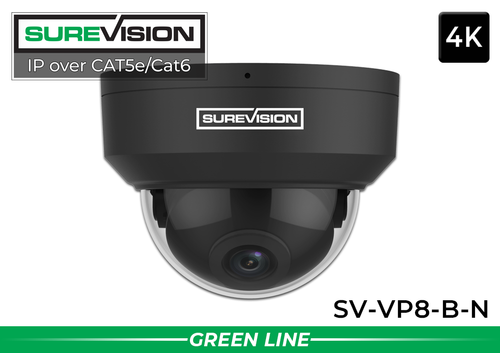
SureVision 4K black vandal dome camera
The SV-VP8-B-N provides an 8MP image in a black vandal-resistant dome housing with audio. Compare its documented lens, mounting and environmental specifications with the installation location. Test the completed dome assembly under the property’s normal nighttime lighting.
View SureVision 4K black vandal dome camera specifications
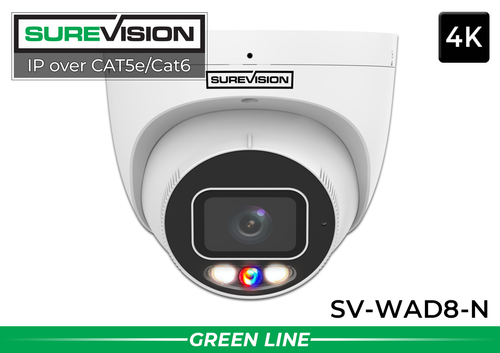
SureVision 4K dual-light dome camera
The SV-WAD8-N combines an 8MP image, a wide 2.8mm lens, infrared and warm-light illumination, and a microphone and speaker. Confirm how the supported lighting and audio functions will be used at the property, with appropriate schedules and permissions.
View SureVision 4K dual-light dome camera specifications
Frequently Asked Questions
Are dome security cameras better than bullet cameras?
Whether a dome is better depends entirely on your specific environment and security goals. Domes excel in high-traffic areas because their housing is difficult to tamper with or redirect. They offer a more discreet look that blends into architecture. While bullet cameras are excellent for long-range perimeter visibility, a dome security camera is often the superior choice for indoor ceilings or outdoor entryways where the hardware is within physical reach.
Can dome cameras see in total darkness?
Yes, professional-grade models are equipped with advanced night vision capabilities to ensure 24/7 protection. Most units use infrared (IR) LEDs to illuminate the area with light that's invisible to the human eye but clear to the camera sensor. Some of our high-specification models also feature full-color night vision. This technology allows the camera to maintain vivid color detail even in extremely low-light conditions, providing better identification than standard black-and-white footage.
Do dome security cameras have a monthly subscription fee?
When you purchase your system from us, you'll never pay a monthly subscription fee for remote viewing or software access. We believe in a one-time equipment sale model where you own the hardware and the data. You can access your live feed from your smartphone or tablet at any time without recurring costs. This eliminates the hidden fees often associated with big-box retail brands and ensures your long-term security budget remains predictable.
Are dome cameras vandal-resistant and weatherproof?
Professional dome cameras are specifically engineered for high-impact resistance and environmental durability. We look for an IK10 vandal-resistant rating, which confirms the housing can withstand significant physical force without breaking. For outdoor use, an IP67 weatherproof rating is essential. This ensures the camera is completely sealed against dust and can withstand heavy rain or snow, making it reliable for national use across diverse climates and challenging weather conditions.
Do dome cameras rotate or move remotely?
Standard dome cameras have a fixed lens that you manually adjust during the installation process to set your field of view. However, if you need the ability to move the camera remotely, you should consider a PTZ (Pan-Tilt-Zoom) dome model. These specialized units allow you to rotate the lens 360 degrees and zoom in on specific details directly from your recorder or smartphone app, offering much greater flexibility for active monitoring.
How do I clean the dome cover without scratching it?
Maintaining a clear image requires proper cleaning of the transparent housing. You should use a clean, dry microfiber cloth to gently wipe away dust. If there is heavier buildup, use a mixture of water and a very mild soap. Never use paper towels or abrasive cleaners, as these will create micro-scratches that catch light and blur your footage. Keeping the cover pristine ensures your infrared night vision remains clear and effective over time.
Can I view my dome camera feed on my phone?
Absolutely. We provide free remote viewing software that allows you to monitor your property from anywhere in the world. Once your system is connected to your network, you can use our dedicated app on your smartphone or tablet to see live video and playback recorded events. This service is included with your purchase, and our USA-based technical support team is always available to help you get your remote access configured correctly.
What is the difference between an IP dome and an analog dome?
The primary difference lies in how the video data is transmitted and the available resolution. IP cameras use digital signals sent over Ethernet cables, allowing for 4K resolution and advanced edge analytics. Analog systems use coaxial cables and are generally more limited in resolution, though modern HD-over-Coax technology has closed that gap. We typically recommend IP systems for new installations because they offer the highest image quality and the simplest Power over Ethernet wiring.