

Best Outdoor Security Cameras and Systems: Complete Buyer’s Guide
Posted by Gregory Derouanna, MBA on Aug 17, 2025
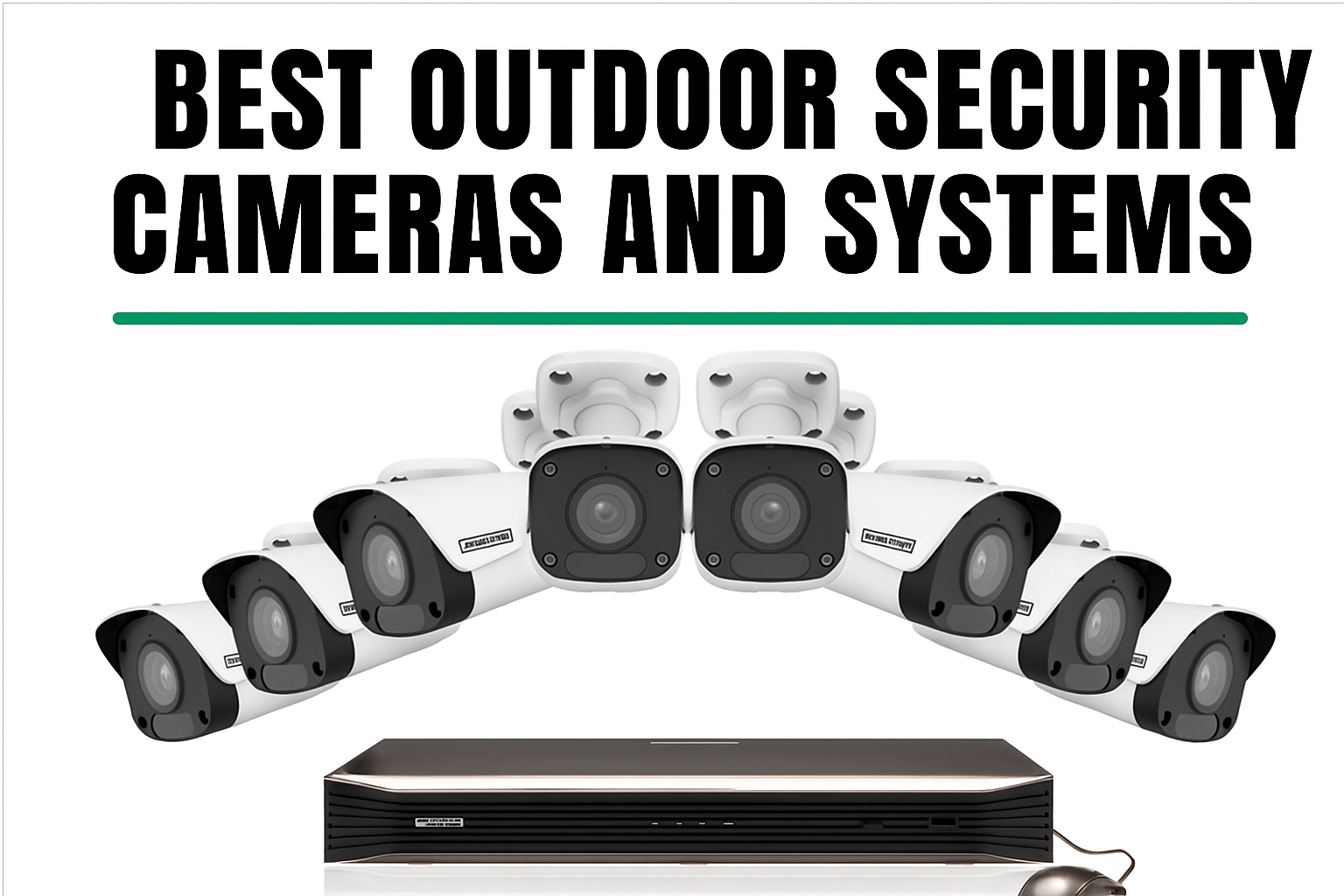
What Makes an Outdoor Security Camera Truly Effective?
An outdoor security camera has a harder job than an indoor camera. Exterior views often include direct sun, deep shade, reflective windows, headlights, rain, insects, wind-blown landscaping and large changes in temperature. The distance between the camera and the subject may also be much greater. A camera mounted on a home may need to show a person at a front door from fifteen feet away, while a business camera may need to watch a loading dock, gate or parking lane dozens of feet from the building.
That is why selecting the best outdoor security cameras starts with the scene. Decide what you need each view to accomplish. Detection means recognizing that a person or vehicle entered an area. Observation means understanding what is happening. Recognition means determining whether the subject is someone or something familiar. Identification demands enough useful detail to distinguish a face or other defining characteristics. A very wide camera can provide excellent situational awareness, but a narrower view may be required when identification at distance matters.
Professional outdoor surveillance normally works best as a group of purpose-selected cameras connected to a central recorder. One camera can watch the overall driveway; another can concentrate on the front door. A wide-angle camera can reduce blind spots near a storefront, while a PTZ camera can provide active monitoring across a large open property. This layered approach is more reliable than expecting one camera to do every job.
Every SureVision camera highlighted below is designed for indoor/outdoor use, so you do not need one product family for interior rooms and another for exterior coverage. You can standardize on compatible PoE cameras and a SureVision network video recorder, then select the camera style and features that best fit each location.
Outdoor Camera Weather Ratings: Understanding IP66 and IP67
A weather rating helps explain how an enclosure resists dust and water. Many professional outdoor security cameras use IP66 or IP67 enclosures. The first digit indicates dust protection; the second addresses water protection. An IP66 enclosure is dust-tight and designed to resist powerful water jets. IP67 adds protection under the specific temporary-immersion test conditions defined by the rating. Neither label means that a camera should be installed underwater, aimed upward where water can collect, or mounted with exposed cable connections.
The enclosure is only part of a dependable outdoor installation. The Ethernet connection and any accessory connections should be protected according to the product instructions. Use the recommended weather-resistant junction box when appropriate, create a drip loop so water does not travel along the cable toward the connection, seal wall penetrations correctly and avoid placing connectors where they will sit in standing water. Coastal air, chemical exposure, extreme heat, cold and direct sun can also affect equipment, cabling and mounting hardware.
Mounting under an eave can help reduce direct exposure, but the camera must still have a clear view. Do not place the lens behind a screen, dirty window or reflective cover. Trim foliage that may trigger motion or reflect infrared light. Keep nearby walls, gutters and soffits from filling the edge of the image, because infrared illumination can bounce off close surfaces and wash out the nighttime scene. A professional outdoor camera is rugged, but thoughtful placement is what allows it to produce professional results.
Why Wired PoE Outdoor Security Cameras Are the Professional Standard
Power over Ethernet, commonly called PoE, carries power and network data over one Ethernet cable to each compatible camera. For a permanent outdoor security camera system, this provides a major practical advantage: the camera does not depend on a nearby electrical outlet or a rechargeable battery. Once the cable is properly installed, a compatible PoE NVR or PoE network equipment can provide steady power and a dependable wired path for video.
Wireless cameras can be helpful at selected locations, but “wireless” does not always mean wire-free. Many still need local power, and Wi-Fi performance can change because of distance, walls, interference, network congestion or access-point placement. Battery and solar cameras have their own tradeoffs, including charging, sleep behavior and variable performance. For entrances, cash-handling areas, loading docks, warehouses, parking lots and other important views, wired PoE outdoor security cameras are generally the stronger foundation.
A PoE design also makes a multi-camera installation easier to manage. Camera cables return to a central equipment location where the NVR, network hardware and backup power can be secured. When planning the route, observe Ethernet distance limits, local electrical and building requirements, outdoor-cable rules and separation from electrical interference. Use the correct cable for indoor, outdoor, plenum or underground applications. If a route crosses between buildings or runs outdoors, evaluate grounding, surge protection and fiber isolation with a qualified installer.
For a practical overview, read the PoE security camera installation guide. If you prefer a complete matched package, compare SureVision PoE security camera systems with cameras, an NVR and storage selected around your property.
Featured Outdoor Security Cameras for Entrances and Building Exteriors
Two dependable indoor/outdoor PoE choices for everyday perimeter, doorway, driveway and general property coverage.
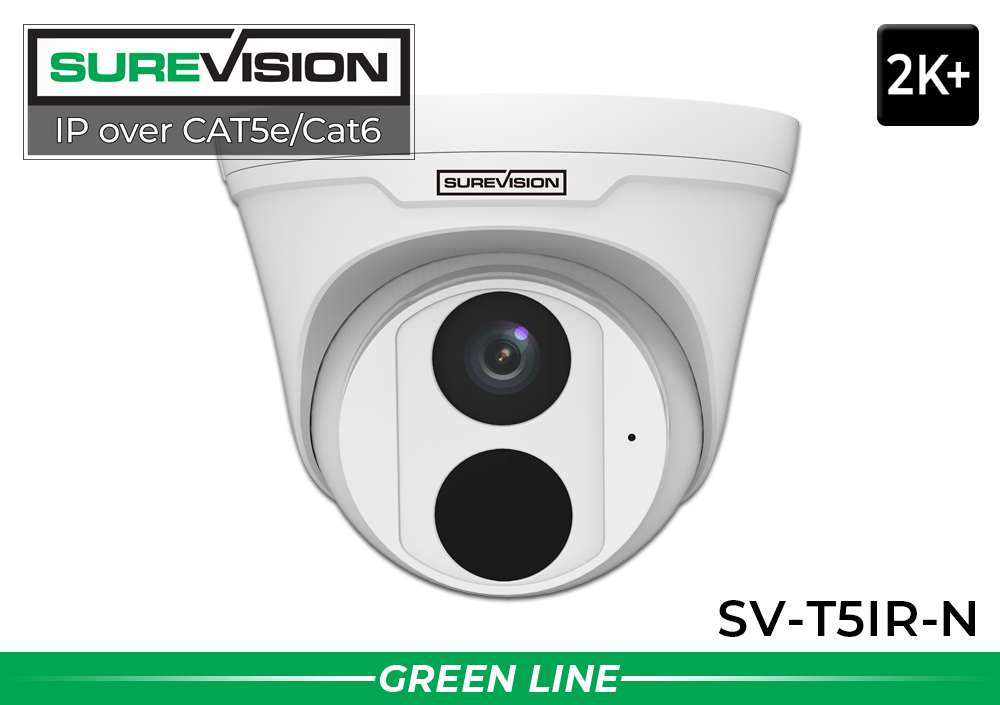
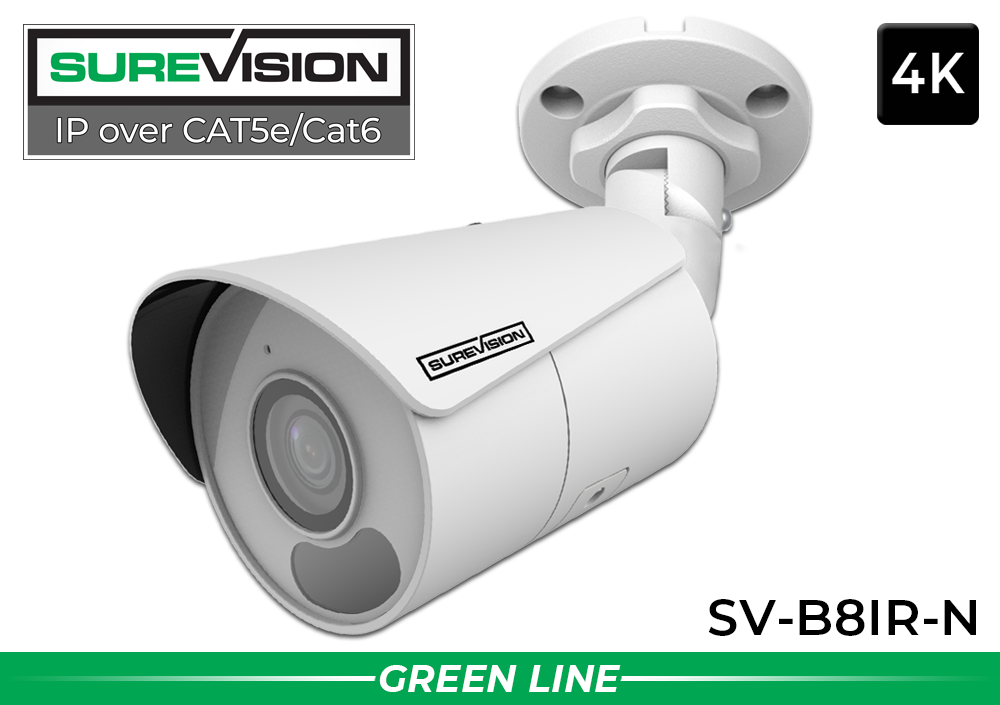
Choosing Outdoor Security Cameras for Night Vision
Night performance deserves as much attention as daytime resolution. Traditional infrared outdoor cameras use invisible or faintly visible infrared illumination to produce a monochrome image in darkness. Infrared is dependable when the scene has little ambient light, but published illumination distance should not be confused with guaranteed identification distance. The usable result depends on lens width, subject size, movement, reflective surfaces, scene depth and camera settings.
Color night vision can preserve useful visual details such as clothing or vehicle color when enough ambient light is available. Some models add a visible spotlight to support full-color nighttime imaging. This can be especially valuable at entrances, parking areas and loading zones, but visible illumination must be aimed responsibly so it does not disturb neighbors, drivers or occupants. If the property already has consistent exterior lighting, a low-light color camera may produce an excellent result without relying entirely on onboard illumination.
Strong backlighting can be just as challenging as darkness. A person standing in a shaded doorway with bright sunlight behind them may appear too dark without proper image processing and placement. Headlights can create glare at driveway or gate views. Wide dynamic range, highlight control and careful camera angles help, but no single setting solves every scene. Test the camera during the actual conditions that matter—morning, afternoon, night, rain and periods of vehicle traffic—then adjust the field of view and image settings.
Avoid These Common Night-Vision Problems
- Infrared reflection: Nearby walls, soffits, gutters, spiderwebs and foliage can reflect IR back into the lens.
- Motion blur: A bright static image can still lose useful detail when a person or vehicle is moving.
- Overly wide scenes: Capturing an entire yard may make subjects too small for identification.
- Dirty lenses: Dust, water spots and webs scatter light and reduce clarity, especially at night.
- Uncontrolled headlights: A camera aimed directly into approaching headlights may need a different angle or a dedicated vehicle view.
The best outdoor security camera system often uses more than one night-vision method. Infrared cameras can protect truly dark perimeters, while full-color or dual-light cameras cover locations where color detail and visible deterrence are priorities.
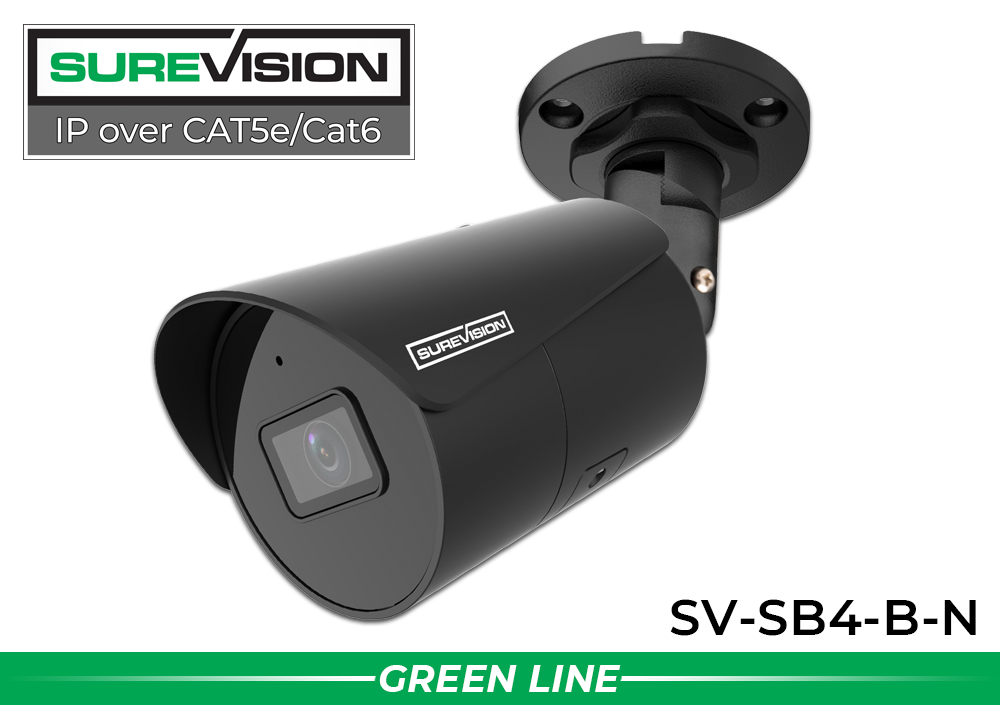
Featured Outdoor Cameras with Color Night-Vision Options
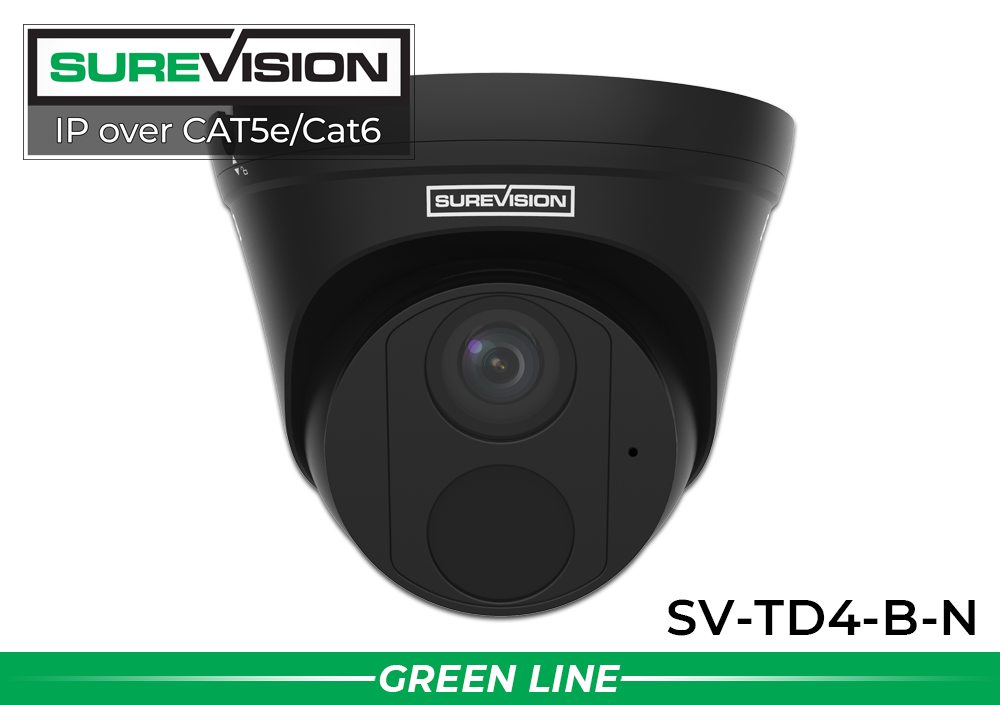
Choose a bullet profile for visible directional coverage or a turret profile for a compact, flexible mounting style.
4K Resolution, Lens Width and the Detail You Actually Need
Higher resolution gives a camera more pixels with which to describe a scene, but resolution is not a substitute for proper composition. A 4K outdoor security camera can provide strong detail when the subject occupies enough of the image. If the same camera is aimed across an enormous parking lot, a person at the far end may still represent only a small number of pixels. This is why a professional design considers pixel density, distance and field of view together.
Wide-angle lenses show more area but spread the available detail across that larger scene. They are ideal for porches, lobbies, open sales floors, short building sides and general overview coverage. Narrower or adjustable lenses concentrate detail in a smaller area and can be better for gates, drive lanes, loading points or specific assets. A varifocal camera is useful when the exact field of view must be adjusted after mounting. A PTZ camera adds optical zoom and movement for active monitoring, but it should not replace all fixed cameras because it can only look in one direction at a time.
When license plates are a priority, do not assume a general-purpose outdoor security camera will provide dependable plate capture under every condition. Vehicle speed, angle, distance, headlight glare and exposure all matter. A dedicated license plate recognition camera should be positioned for a controlled capture lane and supported by an overview camera that records the vehicle and surrounding activity.
For properties where facial detail, merchandise, vehicle appearance or incident review matters, compare 4K IP security cameras. For less critical overview views or shorter distances, a well-positioned 4MP or 5MP camera may provide the right balance of clarity, storage use and cost.
Where to Place Outdoor Security Cameras
Placement determines whether recorded video is merely interesting or genuinely useful. Begin with the routes people and vehicles must use: front and rear doors, side gates, driveways, parking entrances, loading docks, employee doors, service counters, fenced areas and paths between buildings. Cover the destination as well as the approach. A camera directly over a door may show the top of a person’s head, while a second camera positioned off to the side can provide a more useful facial angle.
Front Doors and Main Entrances
Use a focused view that keeps arriving people large enough in the frame. Avoid mounting so high that faces disappear beneath hats or hoods. Check daylight backlighting when the door is open and nighttime illumination when porch lights are on. Pair the entrance camera with a wider overview camera if packages, vehicles or activity across the approach must also be recorded.
Driveways, Parking Lots and Vehicle Gates
Separate overview and identification tasks. A wide camera can show direction of travel and general activity; a narrower camera can concentrate on the point where vehicles slow or stop. Avoid an extreme downward angle and direct alignment with headlights. If plate capture is essential, create a dedicated plate view instead of relying on a camera intended to watch the entire driveway.
Backyards, Alleys and Building Perimeters
Look for blind corners, fence openings, low roofs, stairways and areas hidden from public view. Overlapping coverage can help maintain continuity as a subject moves. Do not let shrubs, flags, steam vents or busy roads dominate a smart-motion zone. Aim the camera so the protected area fills the scene rather than dedicating most of the frame to the sky.
Loading Docks, Warehouses and Service Areas
Use cameras to document vehicle arrival, dock doors, staged goods and access between exterior and interior spaces. Consider a wide overview, a camera for each critical doorway and a focused view of high-value transfer points. A commercial security camera plan should preserve context while providing enough close detail to investigate incidents.
Smart Motion Detection for Outdoor Cameras
Basic video motion detection reacts when pixels change. Outdoors, that can mean alerts from moving branches, shadows, rain, insects or headlights. Smart motion features can classify people and vehicles or apply rules such as line crossing and intrusion zones on supported models. This can make alerts more useful and speed up recorded-video searches, but it should be configured around the scene rather than treated as a guarantee that every event will be classified perfectly.
Start with a clear goal. A driveway zone may need vehicle and person notifications, while a sidewalk along the edge of the image may need to be excluded. A loading dock rule can focus on activity after business hours. A backyard camera can emphasize the gate and patio rather than the entire tree line. Sensitivity, target size, schedule and detection region all affect results.
Smart alerts are most effective when combined with continuous or scheduled NVR recording. The alert helps you find the event, while the full timeline preserves activity before and after it. Learn more in the guide to security cameras with smart motion detection.
Featured Outdoor Cameras for Full-Color and Active PTZ Coverage
Use specialized cameras where standard fixed infrared coverage is not enough.


Pricing note: Prices and promotions can change. The coupon price shown requires code UPGRADE25 at checkout while the promotion is active. Confirm current price and availability on each linked product page.
Outdoor Security Cameras for Business and Home
The core technology can serve both residential and commercial properties, but the design priorities often differ. A home outdoor security camera system may focus on entrances, driveway, garage, backyard and side gates. The owner usually wants simple playback, phone viewing and useful person or vehicle notifications. A four- or eight-camera NVR system may provide enough channels for the current layout while leaving room to add a camera later.
A business system may need more cameras, longer retention, multiple authorized users and coverage across public, employee, inventory and operational areas. Retail stores benefit from views that connect parking-lot activity to entrances and transaction areas. Warehouses need exterior docks, interior aisles, shipping zones and employee access documented on the same timeline. Offices, schools, churches and multifamily properties may require multiple entrances, parking areas, corridors and common spaces.
For commercial surveillance, camera count should be driven by risk and workflow rather than square footage alone. Two buildings of the same size can need very different systems. A simple office with one public entrance may need fewer cameras than a small convenience store with multiple doors, cash handling, fuel pumps and twenty-four-hour traffic. Explore business security camera systems designed for dependable local recording and multi-camera management.
Home Outdoor Coverage
Prioritize the front door, driveway, garage, backyard access and concealed side paths. Use cameras that show faces at entrances and maintain context across the property.
Business Outdoor Coverage
Connect parking, gates, receiving areas and employee entrances to indoor cameras so investigators can follow an event from arrival through departure.
One Indoor/Outdoor Platform
SureVision indoor/outdoor cameras let you mix bullet, dome, turret, wide-angle and PTZ models on a compatible NVR according to each scene.
Security cameras should be installed and used in accordance with applicable privacy, audio-recording, workplace and property laws. Avoid views into areas where people reasonably expect privacy. If audio is enabled, verify consent and notice requirements in your jurisdiction. For schools, workplaces, multifamily properties and public-facing locations, consult the appropriate legal or compliance professional when necessary.
Local NVR Recording with No Required Monthly Fees
An outdoor camera becomes far more useful when it is part of a complete NVR security camera system. The network video recorder receives camera streams, organizes live and recorded views, stores footage on installed surveillance hard drives and provides a central place to search and export evidence. Compatible remote-viewing software lets authorized users access live video and recordings without requiring a paid cloud-storage plan.
Storage duration is not a fixed number. It depends on camera count, resolution, frame rate, bitrate, compression, activity level, recording schedule and total drive capacity. Continuous recording uses storage steadily, while motion-based recording can extend retention in lower-activity scenes. A professional design should estimate retention using realistic settings and preserve extra capacity for future cameras or higher-quality recording.
Choose an NVR with enough supported channels, PoE ports, incoming bandwidth and hard-drive capacity. A larger-channel recorder can create room for expansion even if you begin with fewer cameras. Confirm compatibility before mixing generations or product families. For important systems, protect the recorder in a secure, ventilated location and consider a properly sized uninterruptible power supply for short outages and safe shutdown support.
Local storage improves ownership and control, but remote viewing still requires good security practices. Use unique strong passwords, keep firmware and apps current, limit user permissions, secure the local network and disable accounts that are no longer needed. Review time, date and recording health periodically so footage is correctly timestamped and available when an incident occurs.
Fixed Cameras, Wide-Angle Cameras and PTZ Cameras
Fixed outdoor cameras provide continuous coverage of a defined scene. Because they never turn away, they are the backbone of most systems. Bullet cameras have an obvious directional appearance and work well along building lines, driveways and parking areas. Turret cameras are compact, flexible and easy to aim at walls or ceilings. Dome cameras offer a lower-profile enclosure that can suit entrances, commercial interiors and covered outdoor locations.
Wide-angle and panoramic cameras show a broad scene from one mounting point. They can reduce blind spots at open entrances, garages, courtyards, storefronts or warehouses. Their strength is awareness, not necessarily fine identification at the outer edge of a very large area. A strong layout may pair a 180-degree camera for context with one or more focused cameras at doors or transaction points.
PTZ security cameras can pan, tilt and optically zoom. They are valuable when a security operator actively follows activity or when preset tours and supported tracking functions supplement fixed coverage. Optical zoom preserves more detail than digital enlargement because the lens changes the actual field of view. However, a PTZ camera facing east cannot simultaneously record a detailed view to the west. Critical areas should remain covered by fixed cameras even when a PTZ is added.
For campuses, industrial sites, parking lots, farms and large commercial properties, browse SureVision PTZ security cameras. Match zoom range and mounting height to the property, and confirm PoE+ or other power requirements for the selected model.
How Many Outdoor Security Cameras Do You Need?
Start with a property map and mark doors, windows, gates, driveways, parking areas, walkways, loading areas, valuable assets and concealed approaches. Then assign a purpose to every proposed camera. If two cameras perform the same job from nearly the same angle, one may be unnecessary. If a camera is expected to provide both a huge overview and close identification at long distance, split that job into two views.
- List the critical events. Examples include a person approaching a door, a vehicle entering a lot, merchandise moving through receiving or activity at an after-hours gate.
- Choose the evidence level. Decide whether each view is for detection, observation, recognition or identification.
- Measure distance and scene width. These determine lens choice and whether a fixed wide view is sufficient.
- Evaluate day and night lighting. Note direct sun, backlight, headlights, deep darkness and available exterior lighting.
- Plan cable routes. Consider distance, building penetrations, outdoor exposure, surge risk and recorder location.
- Leave expansion capacity. A recorder with spare channels can accommodate a missed blind spot, added building or future specialty camera.
A small home may be well served by four to eight thoughtfully placed cameras. A commercial property may require sixteen, thirty-two or more. The answer is not determined by property size alone. CCTV Security Pros can help match camera count, camera styles, NVR capacity and storage to the locations you need to protect.
Outdoor Security Camera Installation and Maintenance Checklist
Even rugged outdoor cameras need a sound installation and periodic inspection. Before drilling, verify the field of view with a temporary test position. Confirm that the surface and fasteners can safely support the camera and any junction box. Follow manufacturer instructions, local codes and property rules. Professional help is appropriate when work involves high elevations, difficult cable paths, lightning exposure, multiple buildings or regulated facilities.
During Installation
- Protect every exterior connection.
- Use a drip loop and correct weather sealing.
- Keep the lens clear of nearby reflective surfaces.
- Label both ends of every cable.
- Record camera names and intended views.
After Installation
- Verify daylight and nighttime images.
- Test alerts and recording playback.
- Confirm system time and camera status.
- Create secure individual user accounts.
- Export a test clip before an emergency.
Inspect outdoor security cameras on a regular schedule and after severe weather. Clean lenses gently with suitable materials, remove spiderwebs and trim vegetation. Check that mounts remain tight, seals are intact and camera views have not shifted. Review hard-drive and recording status from the NVR. A camera that displays live video but is not recording can create false confidence.
Keep an inventory of camera models, serial numbers, installation dates and locations. Document changes to network settings and user access. This simple record makes maintenance, warranty service and future expansion much easier, especially on business properties with many cameras.
Outdoor Security Camera FAQs
Are all SureVision cameras outdoor cameras?
The professional SureVision cameras featured in this guide are indoor/outdoor models. Always review the specific product’s environmental rating, temperature range and installation instructions before choosing a location.
What is the best outdoor security camera?
The best model is the one matched to the scene. Consider subject distance, required detail, lens width, night lighting, mounting surface, audio needs, smart detection and recorder compatibility.
Is IP67 better than IP66?
Both are strong outdoor enclosure ratings. IP67 adds protection under defined temporary-immersion testing, but correct mounting and protected connections remain necessary with either rating.
Do outdoor security cameras need Wi-Fi?
PoE IP cameras use a wired Ethernet connection and do not rely on Wi-Fi for their main video path. Remote viewing may require an internet connection, but local NVR recording can continue on the local system.
Do wired outdoor cameras need power?
Yes. A compatible PoE camera receives power and data through one Ethernet cable from a PoE NVR or other suitable PoE source.
Will security cameras record during an internet outage?
A properly configured local NVR system can continue recording on the local network during an internet outage if the cameras, recorder and network equipment still have power. Remote viewing will generally be unavailable until internet service returns.
Do outdoor cameras require monthly fees?
SureVision camera and NVR systems support local recording and compatible remote viewing without a required monthly cloud-storage fee. Optional third-party services, internet and installation costs are separate.
How high should an outdoor camera be mounted?
Mount high enough to reduce easy tampering but low enough to preserve the angle and detail needed. There is no universal height; entrance identification often benefits from a lower, more facially useful angle than broad perimeter coverage.
Is 4K necessary for outdoor surveillance?
4K is valuable when more image detail is required, but a properly positioned 4MP or 5MP camera may be sufficient for a shorter, controlled view. Lens and distance matter as much as resolution.
Can one outdoor camera cover an entire yard?
A wide camera may provide a useful overview, but subjects can become too small for identification. Use focused cameras at entrances and other critical points in addition to broad overview coverage.
What is color night vision?
Color night vision uses low-light imaging and, on some models, visible supplemental lighting to retain color after dark. Performance depends on available light, distance and scene conditions.
Why does night vision look foggy or white?
Infrared may be reflecting from dirt, water spots, spiderwebs, a wall, soffit, glass or foliage near the lens. Clean the camera and adjust the view away from close reflective objects.
Can outdoor cameras record audio?
Some models include a microphone, while others support external audio or no audio. Features vary by model. Confirm local audio-recording and notice laws before enabling audio.
How much NVR storage is needed?
Storage depends on camera count, resolution, bitrate, frame rate, compression, schedule and desired retention. Size storage from realistic recording settings rather than a single generic estimate.
Should I use a PTZ or fixed camera outdoors?
Fixed cameras continuously protect critical views. PTZ cameras add active movement and optical zoom for large areas. Most professional layouts use fixed cameras as the foundation and PTZ as a supplement.
Can I mix camera styles on one NVR?
Compatible SureVision dome, turret, bullet, wide-angle and PTZ cameras can be selected around different views. Confirm model, recorder, power and feature compatibility before ordering.
How often should outdoor cameras be maintained?
Inspect them periodically and after severe weather. Clean lenses, remove webs, trim foliage, verify mounts and connections, check nighttime images and confirm NVR recording.
Can a normal camera reliably read license plates?
Sometimes under favorable conditions, but reliable plate capture usually needs a dedicated camera and controlled view designed around vehicle speed, angle, distance and headlights.