
License Plate Cameras: Complete Guide to LPR & ANPR Security Cameras
Sep 17, 2026
License Plate Cameras: Complete Guide to LPR & ANPR Security Cameras
License plate cameras are designed for a very different job than ordinary wide-angle surveillance cameras. Instead of trying to monitor an entire parking lot or driveway, a properly configured LPR camera concentrates on a defined vehicle capture zone where license plates can be recorded and recognized.
This guide explains how license plate recognition cameras work, the difference between LPR, ANPR and basic plate capture, the importance of lens selection and camera placement, and how to build a professional vehicle surveillance system with local recording and no required monthly viewing fees.
What Is a License Plate Camera?
A license plate camera is a surveillance camera configured specifically to capture vehicles and license plates within a planned area. Professional LPR and ANPR cameras can go further by recognizing plate characters and creating searchable vehicle data. The best results depend on more than resolution: lens choice, shutter speed, vehicle speed, viewing angle, lighting, distance and the size of the plate within the image all matter.
Why a Regular Security Camera May Not Be Enough
A conventional security camera is normally designed to provide useful surveillance across a broader scene. That may be exactly what you want when monitoring a building, parking area, warehouse or yard. License plate capture presents a different challenge.
Vehicles move, license plates reflect light, headlights create strong contrast, and the plate itself may occupy only a small portion of a wide camera image. A purpose-built license plate recognition camera lets the installer concentrate the view on a specific lane or vehicle approach rather than asking one wide-angle camera to perform two different jobs.
LPR vs. ANPR vs. License Plate Capture
You will encounter several terms when researching license plate cameras. They are related, but they do not always describe exactly the same capability.
Why Motorized Optical Zoom Matters for License Plates
One of the most important differences between a general-purpose camera and a specialized LPR camera is the ability to frame a defined vehicle lane properly.
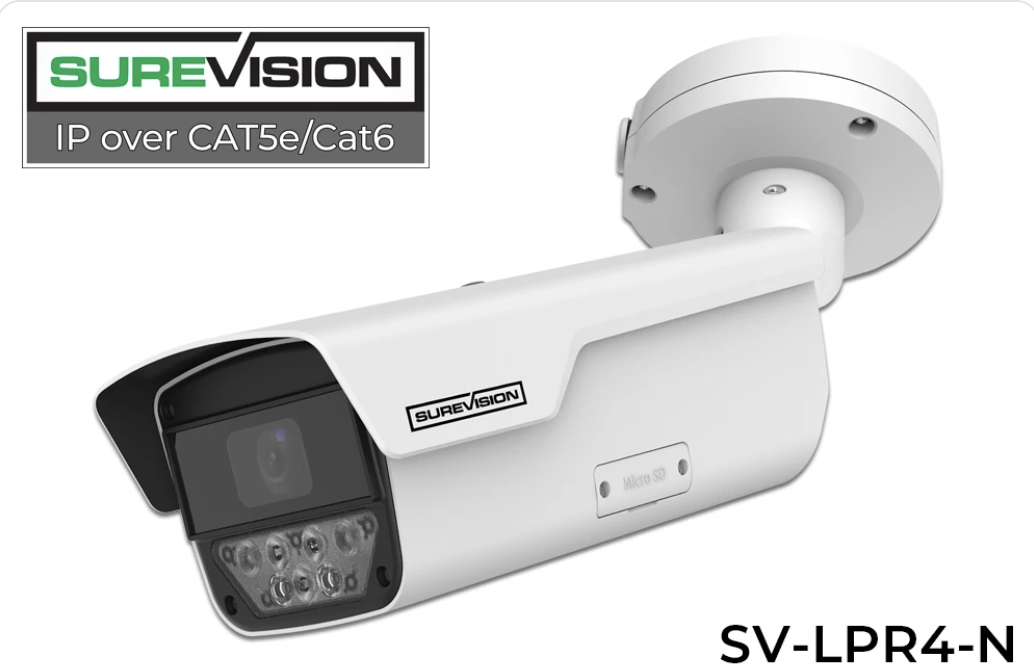
The SV-LPR4-N uses a 10–50mm motorized zoom lens. Rather than digitally enlarging a tiny section of an already-recorded wide image, optical zoom allows the camera's field of view to be adjusted around the actual area where vehicles pass. This helps concentrate available image detail on the capture zone.
License Plate Camera Placement
Camera placement can be just as important as the camera itself. A successful installation starts by identifying where vehicles naturally pass through a predictable area: a gate, driveway, parking entrance, exit lane or other controlled approach.
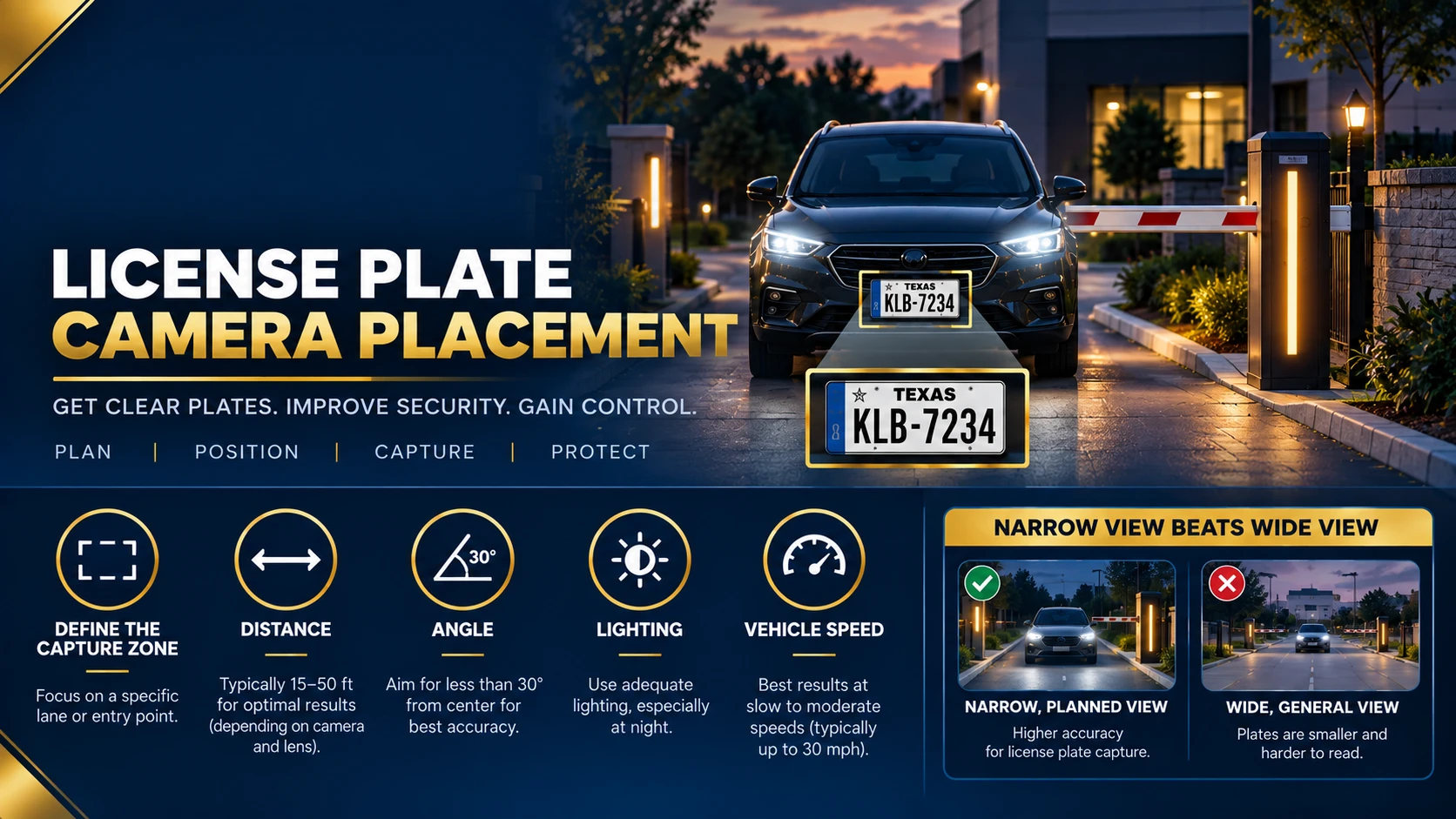
The goal is usually a planned, relatively narrow vehicle capture view, not the widest view possible. Mounting angle, target distance, lighting, vehicle speed and the size of the plate in the image should all be considered during setup.
5 Factors That Affect License Plate Capture
Capturing License Plates at Night
Nighttime vehicle surveillance is challenging because the camera may encounter dark surroundings, bright headlights and highly reflective license plates at the same time.
The SV-LPR4-N provides built-in infrared or warm-light illumination with a published range of up to approximately 164 feet. Actual results depend on the installation, target distance, camera settings, environmental conditions and scene. Its 120 dB WDR also helps the camera manage scenes containing significant differences between bright and dark areas.
Vehicle Speed, Frame Rate & Shutter Speed
Motion is another reason an ordinary surveillance camera may struggle with vehicle identification. A slower shutter exposes each frame for a longer period of time, increasing the possibility of motion blur as a vehicle passes.
The SV-LPR4-N supports shutter settings from 1/500 to 1/100000 second and video up to 60 frames per second. It also lists road-monitoring support for vehicles up to 80 km/h. Final performance still depends on scene design, vehicle direction, distance, lighting, lens adjustment and configuration.
More Than a Picture: License Plate & Vehicle Recognition
A professional LPR system can provide more useful vehicle information than a conventional video clip alone. The SV-LPR4-N supports multi-country license plate recognition with allowlist and blocklist functionality. It can also recognize supported vehicle characteristics including vehicle type, color and manufacturer.
PoE, NVR Recording & Remote Viewing
The SV-LPR4-N is a professional IP camera supporting Power over Ethernet (PoE). With compatible equipment, network video and camera power can travel over one Ethernet connection, simplifying a hardwired installation.
Connect the camera to a compatible SureVision NVR for local hard-drive recording, playback, event search and centralized camera management.
Compatible mobile and desktop software provides supported remote access while your primary recordings remain local. There are no required monthly viewing fees for the SureVision setup.
Should an LPR Camera Replace Your Other Security Cameras?
Usually, the two camera types perform complementary jobs. An LPR camera can be aimed tightly at a vehicle lane while conventional surveillance cameras provide wider views of people, buildings, parking areas and the surrounding property.
A commercial property might therefore use one dedicated license plate camera at an entrance together with several SureVision IP security cameras for general surveillance.
How to Choose a License Plate Camera
Start with the property rather than simply choosing the camera with the highest resolution. Determine where vehicles enter, the distance between the mounting point and capture zone, approximate vehicle speed, lighting conditions and whether you need visual plate capture or automated plate recognition.
SureVision License Plate Recognition
The SureVision SV-LPR4-N combines purpose-built license plate recognition with professional IP surveillance features, local recording options and remote access. CCTV Security Pros can also help with camera placement, NVR compatibility, storage, cabling and system configuration.
Frequently Asked Questions About License Plate Cameras
What is the difference between a license plate camera and a regular security camera?
What does LPR mean?
What does ANPR mean?
Does a license plate camera need to be 4K?
Can license plate cameras work at night?
Can I record an LPR camera to an NVR?
Where should a license plate camera be installed?
Build the Right License Plate Camera System
Tell us about your driveway, gate, parking entrance or vehicle lane. CCTV Security Pros can help determine camera placement, lens requirements, compatible recording equipment and storage for your application.