
Dome vs. Bullet Security Cameras - Which is Better?
Posted by Gregory DeRouanna on Aug 10, 2024
Dome vs. Bullet Security Cameras: Which Is Better?
Dome and bullet security cameras can use the same professional imaging technology, yet their different housings make each style better suited to particular locations. Dome cameras provide a compact, architectural appearance that works especially well under ceilings and soffits. Bullet cameras create a more visible deterrent and make the camera's direction easy to understand, which is useful along building exteriors, parking areas, driveways and property lines.
The right choice is not determined by shape alone. Resolution, lens selection, viewing distance, night vision, mounting height, lighting and recorder compatibility all have a greater effect on usable evidence. This guide compares dome security cameras with bullet security cameras so businesses, homeowners and public organizations can plan professional surveillance coverage with confidence.
Choose a dome camera when you want a lower-profile design for ceilings, entrances, sales floors, offices or other finished spaces. Choose a bullet camera when you want obvious deterrence, simple directional aiming or focused coverage across an exterior route. For many professional security camera systems, the best answer is a combination: domes for interior and sheltered areas, bullets for exteriors and longer sightlines.
Dome cameras • Bullet cameras • Side-by-side comparison • Image quality • Business applications • FAQs
What Is a Dome Security Camera?
A dome security camera places its lens and internal electronics inside a compact rounded housing. Many models use a clear protective cover, while turret-style cameras use a ball-and-socket design without a full transparent dome. These designs are related, but they are not identical: a true dome may offer greater protection around the lens, while a turret can reduce the possibility of infrared light reflecting from a clear cover.
Dome cameras are widely used in professional surveillance because they fit neatly beneath ceilings, overhangs and soffits. They are common in retail stores, restaurants, schools, healthcare facilities, office buildings and indoor common areas where performance matters but an industrial-looking camera may be distracting.
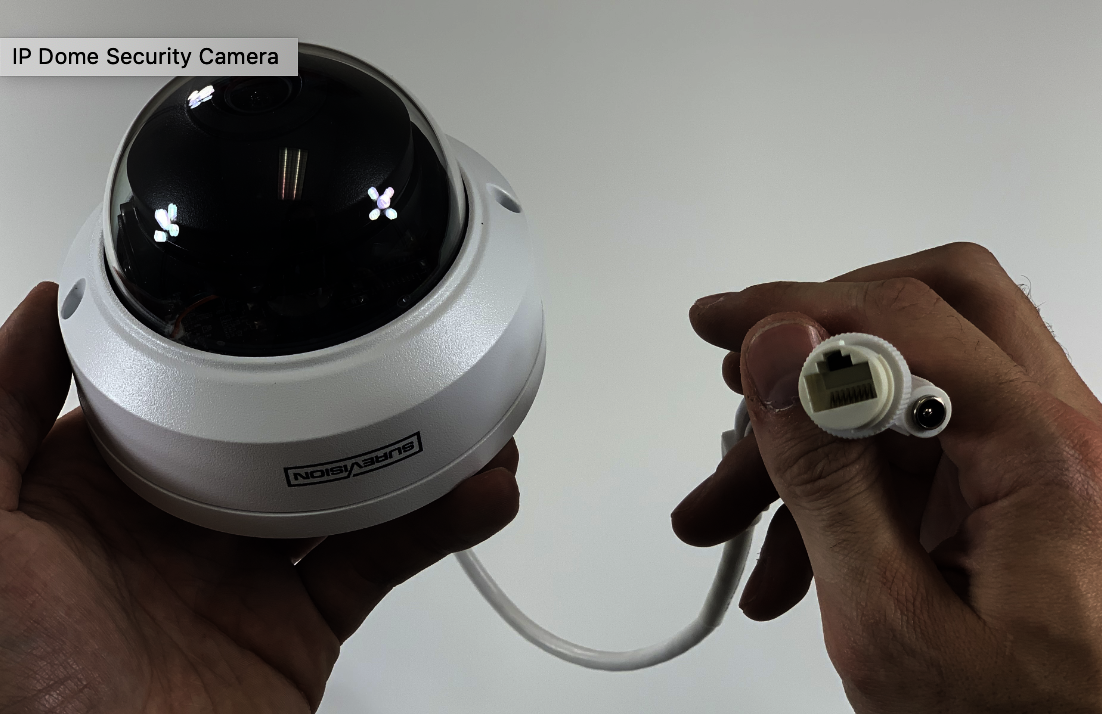
Advantages of dome security cameras
- Lower-profile appearance: The compact housing blends more naturally into finished interiors and sheltered architectural spaces.
- Excellent ceiling placement: Domes are a natural fit above entrances, registers, hallways, lobbies and other areas viewed from overhead.
- Protected lens assembly: A properly rated housing can help shield the lens from casual contact, dust and attempts to change its position.
- Wide-angle options: Fixed wide-angle dome cameras can cover rooms, reception areas and nearby entrances efficiently.
- Professional appearance: Their clean shape makes them popular where surveillance should look intentional without dominating the room.
Potential dome camera tradeoffs
A clear dome must stay clean and free from scratches. Dust, moisture, fingerprints or spiderwebs can scatter infrared light back toward the lens and create a hazy nighttime image. Reflections may also occur if a camera is installed too close to a wall, trim, gutter or other surface. Proper placement, a clean cover and careful positioning of the lens inside the housing are essential.
It is also important not to assume that every dome is vandal resistant. A model should have a durable construction and an appropriate impact rating for exposed public areas. Likewise, most dome cameras are fixed cameras—not cameras that continuously look in every direction. A PTZ security camera is a separate motorized camera class designed for remote pan, tilt and zoom control.
What Is a Bullet Security Camera?
A bullet security camera uses a cylindrical or rectangular housing mounted on an adjustable bracket. The design makes its viewing direction easy to recognize and allows the installer to aim the camera toward a gate, driveway, loading dock, parking aisle, fence line or building entrance. Because bullet cameras are visually prominent, they can also tell visitors that a property is being monitored.
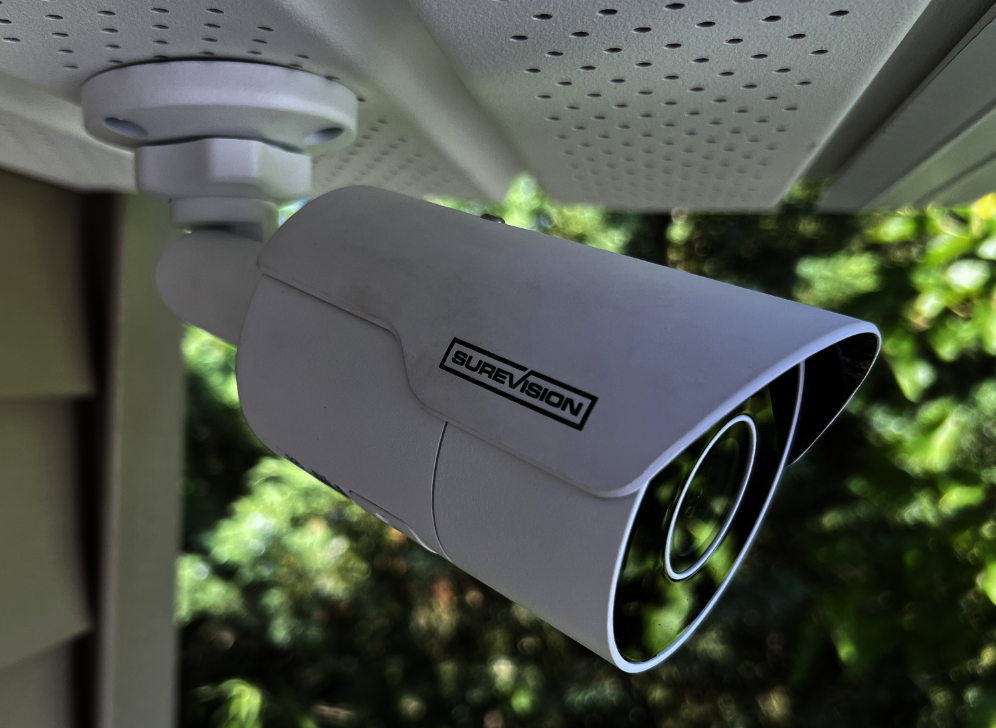
Advantages of bullet security cameras
- Visible deterrence: The recognizable camera shape clearly communicates that video surveillance is present.
- Easy directional aiming: The mounting arm makes it simple to understand and adjust the camera's viewing direction.
- Focused exterior coverage: Bullet cameras work well for driveways, gates, parking lots, alleys, loading zones and long building approaches.
- Strong equipment options: Many bullet models are available with motorized zoom lenses, powerful infrared illumination, audio and active-deterrence features.
- Sun and weather shielding: An integrated sunshield on many models helps protect the front glass from direct sunlight and precipitation.
Potential bullet camera tradeoffs
The same visibility that makes a bullet camera a deterrent can be less desirable inside a carefully designed public space. Its projecting bracket is also more accessible to tampering if the camera is mounted too low. A professional installation plan should place the camera high enough to protect it while preserving the angle needed for useful facial or vehicle detail.
Bullet cameras do not automatically see farther than domes. Their larger housing may accommodate certain long-range lenses or infrared arrays, but real performance still depends on the camera model, focal length, sensor, resolution, lighting and placement. A wide-angle bullet aimed across a large parking lot may provide less identification detail at the far edge than a correctly selected varifocal dome.
Dome vs. Bullet Security Cameras: Side-by-Side Comparison
| Comparison | Dome Camera | Bullet Camera |
|---|---|---|
| Appearance | Compact and architectural | Prominent and clearly directional |
| Deterrence | More subtle presence | Highly visible deterrent |
| Typical mounting | Ceilings, soffits and walls | Walls, poles and exterior structures |
| Aiming | Adjusted within its housing | Direction is easy to see and adjust |
| Night vision | Excellent when correctly installed and maintained | Excellent; many long-range IR options |
| Tamper resistance | Strong when the model is impact rated | Best when mounted beyond reach |
| Best-known uses | Retail, offices, lobbies, halls and entrances | Perimeters, lots, docks, gates and driveways |
Housing style and camera technology are separate decisions. Dome and bullet cameras can both be built as IP/PoE cameras or HD-over-coax CCTV cameras. Choosing between an NVR-based IP system and a DVR-based coax system determines cabling and recording technology; choosing dome versus bullet determines the housing, mounting style and visual presence.
Does a Dome or Bullet Camera Have Better Image Quality?
Neither housing automatically produces better video. A dome and bullet camera with the same sensor, lens, resolution and image-processing platform can deliver very similar results. When comparing professional security cameras, focus on the details that determine whether recorded video will be useful.
Resolution and recorded detail
Higher resolution gives the system more pixels with which to represent a scene, but resolution is only one part of the result. A professional 4MP camera can be an excellent choice for general surveillance, entries and moderate viewing distances. A 4K camera provides more pixels for wide scenes, digital zoom and evidence review, provided the recorder, storage and network are designed to support it.
Do not choose resolution in isolation. A wide scene spreads available pixels across more of the property. If identification at a gate, register or doorway is the goal, the camera must be positioned and framed so a person or vehicle occupies enough of the recorded image.
Fixed and varifocal lenses
A fixed lens provides one consistent field of view. It is efficient for rooms, entrances and other predictable scenes. A varifocal or motorized zoom lens lets the viewing angle be adjusted during setup, making it easier to concentrate pixels on a driveway, loading dock, gate or other distant target. This lens choice—not whether the housing is dome or bullet—often determines which camera sees useful detail farther away.
Night vision and low-light performance
Both styles are available with infrared night vision. Compare the specified IR distance, sensor performance, aperture and the amount of ambient light at the site. Built-in IR can illuminate darkness, but the best nighttime evidence also depends on exposure control, subject movement and reflective surfaces. Explore professional night vision security cameras when after-hours performance is a priority.
A dome cover requires special attention at night. Dirt or moisture on the cover can reflect infrared light. Bullet cameras can also experience glare from nearby walls, rooflines, signs or vegetation. Test the actual nighttime scene after installation instead of assuming daytime positioning will work equally well after dark.
Backlighting, weather and motion
Wide dynamic range can help at doorways and loading bays where a dark interior meets bright outdoor light. Weather ratings help determine whether a camera can withstand rain and dust. Shutter control and supplemental lighting affect moving subjects. These specifications are more meaningful than broad claims that one camera shape is always better indoors, outdoors or at night.
Which Camera Is Better for Outdoor Surveillance?
Either can be an outdoor security camera when it has the correct environmental rating. Bullet cameras are popular outdoors because their shape is visible, easy to aim and often equipped with a sunshield. Domes are effective under soffits, building entrances and other locations where a compact profile is preferred. The product's ingress-protection rating, operating-temperature range, construction and connection protection matter more than its shape.
For reliable outdoor operation, protect cable connections inside an appropriate junction box, avoid aiming directly into intense light, keep the lens or dome clean and trim vegetation that may block the view or reflect infrared light. Mounting under an overhang can reduce direct exposure, but the selected camera should still be rated for the environment.
Which Camera Is More Vandal Resistant?
A rugged dome often provides a strong choice for low ceilings and public areas because the lens assembly is enclosed and the smooth housing is difficult to grab. However, the word “dome” is not a vandal-resistance rating. Look for a model specifically engineered for impact resistance. A bullet camera can also be protected effectively when installed high, secured to a stable surface and positioned so its bracket cannot be reached easily.
For high-risk locations, placement is part of the protection strategy. Use overlapping views so one camera watches the approach to another. Keep recorders and network equipment in a secure space. If a camera is damaged, local recording to an NVR or DVR preserves footage already captured before the incident.
Dome vs. Bullet Cameras for Business Security
Commercial properties rarely have one uniform surveillance need. A sales floor, stockroom, employee entrance, parking area and loading dock each present different distances and risks. That is why professional business security camera systems often combine several camera styles instead of forcing one housing into every location.
Dome cameras fit naturally above sales floors, registers, dining areas, hallways and entrances. Bullet cameras can watch delivery doors, parking areas, dumpsters and exterior approaches.
Domes work above work areas and interior intersections. Varifocal bullet cameras can focus on dock doors, fenced yards, inventory lanes and vehicle routes.
Low-profile domes suit reception areas, corridors and shared spaces. Bullets provide a visible presence at exterior doors, garages and property boundaries.
A mixed design can balance discreet interior monitoring with visible exterior deterrence. Camera placement should follow applicable privacy and organizational policies.
Parking lots and building perimeters
Bullet cameras are commonly selected for parking lots because their direction is clear and their housing can support focused lenses and long-range infrared options. Even so, one extremely wide camera should not be expected to identify every person and license plate across a large property. Use multiple planned views, adequate lighting and focal lengths matched to the actual target distance.
Entrances, registers and transaction points
Dome cameras are frequently placed near entrances and points of sale because their compact housing fits ceiling locations. The camera should be positioned for a useful face angle—not merely a top-down view of a person's head. At registers, frame the transaction area while respecting privacy requirements and avoiding unnecessary coverage of PIN entry.
Dome vs. Bullet Cameras for Home Security
Homeowners can use the same decision process. A dome may look cleaner beneath a porch ceiling or inside a garage, while a bullet can visibly protect a driveway, backyard gate or side passage. Choose the mounting point based on the route a visitor must take, the distance at which identification is needed and the lighting available at night.
A complete wired system records locally and can provide remote viewing without requiring a monthly cloud subscription. For a home with multiple entry points, mixing dome and bullet cameras can create better coverage than choosing every camera by appearance alone.
Professional Features to Compare Before You Buy
- Viewing objective: Decide whether each location requires general awareness, recognition or identification-level detail.
- Lens and distance: Match the focal length and field of view to the width of the scene and the target distance.
- Resolution: Select enough recorded detail for the scene while accounting for storage and bandwidth.
- Night performance: Compare infrared range, low-light ability, nearby reflections and available exterior lighting.
- AI detection: Human and vehicle classification can reduce irrelevant motion alerts when configured for the scene.
- Audio and deterrence: Some locations benefit from built-in microphones, speakers, warning lights or sirens, subject to local laws.
- Weather and impact ratings: Choose equipment rated for the site's temperature, moisture, dust and tampering risk.
- Recorder compatibility: Confirm camera, NVR or DVR technology, resolution support and available channels before purchase.
- Future expansion: Leave recording channels, storage capacity and network headroom for additional cameras if the property may grow.
IP/PoE or HD-Over-Coax?
Professional dome and bullet cameras are available for both modern IP systems and HD-over-coax systems. SureVision IP cameras connect to a compatible NVR over an Ethernet network. With PoE, one network cable can carry video, data and power between the system and each camera. This makes IP/PoE a strong choice for new installations, advanced analytics and long-term expansion.
HD-over-coax cameras connect to a DVR and can be an efficient way to upgrade a property with usable existing coaxial cabling. The correct path depends on the cables already in place, required features, desired resolution, expansion plan and budget. Camera shape does not lock you into either recording technology.
Browse SureVision IP security cameras or compare complete professional security camera systems to plan cameras, recording and storage together.
Common Dome and Bullet Camera Buying Mistakes
- Choosing by shape alone: Housing style cannot compensate for the wrong lens, resolution or camera position.
- Using one wide view for everything: A camera may detect activity across a large scene without capturing enough detail for identification.
- Ignoring nighttime conditions: Headlights, reflective walls, dirty covers and complete darkness can change performance dramatically.
- Mounting too high: Excessive height may protect the camera but leave only the tops of heads in recorded video.
- Leaving connections exposed: Outdoor cable terminations should be protected from moisture and unauthorized access.
- Forgetting recorder limits: Camera resolution and features must be supported by the selected recorder, channels, network and storage plan.
How to Choose Between Dome and Bullet Cameras
Choose a dome camera when:
- You want a compact camera for a ceiling, soffit or finished interior.
- You need wide coverage of a nearby room, entrance or transaction area.
- A smooth, impact-resistant housing is important for an accessible location.
- You prefer a professional camera that is present without being visually dominant.
Choose a bullet camera when:
- You want a highly visible security presence.
- The viewing direction should be obvious and easy to adjust.
- You are watching a driveway, gate, wall, lot, dock or property boundary.
- You need a model with a focused lens or longer-range infrared illumination.
Choose both when the property contains both types of scenes. Compatible dome and bullet cameras can record to the same appropriately selected NVR or DVR. A mixed design lets each location use the housing, lens and features that serve it best.
Frequently Asked Questions
Are dome or bullet security cameras better?
Neither is universally better. Dome cameras are often preferred for compact ceiling-mounted coverage, while bullet cameras are often preferred for visible exterior and directional coverage. Lens, resolution, lighting and placement determine actual video performance.
Which camera is better outdoors?
Both can work outdoors if the model is rated for the environment. Bullet cameras are common on exterior walls and perimeters; domes are effective under soffits and entrances. Compare weather ratings rather than relying on housing shape.
Do bullet cameras see farther than dome cameras?
Not automatically. Some bullet models offer longer lenses or IR ranges, but distance performance depends on focal length, sensor, resolution, lighting and target size. A properly selected varifocal dome can outperform a wide-angle bullet at a specific distance.
Which has better night vision?
Either style can provide excellent night vision. Compare the model's infrared range and low-light specifications. Dome covers must remain clean to prevent IR reflection, while any camera should be kept away from nearby reflective surfaces.
Can a dome camera see 360 degrees?
A standard fixed dome sees only the area covered by its lens. The dome shape does not create a 360-degree view. Specialized multi-sensor or fisheye cameras can cover very wide areas, and motorized PTZ cameras can be directed remotely.
Are dome cameras vandal proof?
Some are designed to resist impact and tampering, but not every dome has that protection. Check the model's construction and impact rating. Proper mounting height, hardware and overlapping camera coverage remain important.
Can dome and bullet cameras work on the same system?
Yes. Compatible dome and bullet cameras can be mixed on the same NVR or DVR. Confirm technology, protocol, resolution, channel capacity and feature support before combining equipment.
Do professional wired cameras require monthly fees?
A professionally designed system can record locally to its NVR or DVR without a required monthly cloud-storage fee. Remote viewing can still be available through compatible mobile and desktop software.
How many cameras does my property need?
The answer depends on entrances, critical assets, sightline obstacles, identification points and perimeter size. Start with a map of priority areas, then assign a specific objective and viewing distance to each camera location.
Build the Right Professional Surveillance System
Dome and bullet security cameras are not competing technologies. They are complementary tools. A dome can provide polished interior or sheltered coverage, while a bullet can protect a long exterior route and reinforce deterrence. The strongest design selects each camera according to the scene and connects those cameras to a recorder with enough channels, storage and performance for the entire property.
CCTV Security Pros offers professional security cameras, local-recording systems and customized equipment recommendations for businesses, homes and government organizations. Explore the Security Camera Learning Center for more planning guidance, or speak with a Security Pro to compare camera styles, lenses, recorders and storage.
Get a customized system recommendation from CCTV Security Pros. Since 2008, we have helped more than 75,000 customers protect businesses, homes and public facilities with professional equipment, local recording and no required monthly fees.